Business
Foreign Exchange Reserves and Their Importance for a Country: The Case of Zambia
Analysis By Professor Lubinda Haabazoka Foreign exchange reserves (often called forex reserves) are one of the most important indicators of a country’s financial strength and external stability. They represent the stock of foreign currency assets held by a country’s central bank to support its currency…
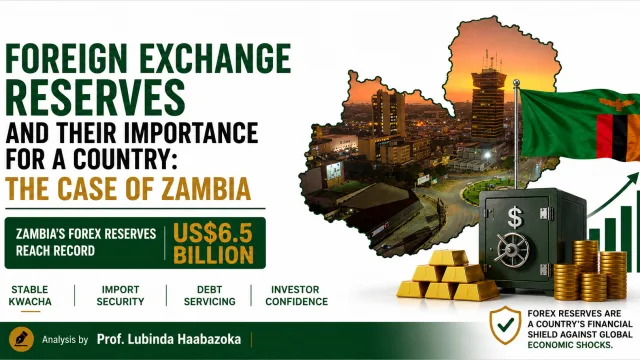
Picture: Mwebantu
Analysis By Professor Lubinda Haabazoka
Foreign exchange reserves (often called forex reserves) are one of the most important indicators of a country’s financial strength and external stability. They represent the stock of foreign currency assets held by a country’s central bank to support its currency and meet international payment obligations.
For Zambia, recent reports indicate that foreign exchange reserves have reached about $6.5 billion, the highest level ever recorded in the country’s history. This milestone is significant not only for policymakers but also for ordinary citizens, as it reflects broader economic stability and resilience.
What Exactly Are Foreign Exchange Reserves?
Foreign exchange reserves are external assets held by a central bank and typically include:
Lakatips
Advertise on Lakatips
Reach readers following the national conversation
Display, sponsored placements and briefing slots — across politics, business and sport.
1. Foreign Currencies
These are major global currencies such as the US dollar, euro, British pound, and others. They are used to settle international trade and financial obligations.
2. Gold Holdings
Many central banks hold gold as a safe-haven asset. Gold retains value over time and provides protection during global financial instability.
3. Special Drawing Rights (SDRs)
SDRs are international reserve assets created by the International Monetary Fund (IMF). They can be exchanged for freely usable currencies when needed.
4. Foreign Government Securities
These include bonds issued by stable economies such as US Treasury securities, which are highly liquid and secure.
5. Foreign Deposits and Cash Balances
These are funds held in foreign commercial banks to facilitate international payments and trade transactions.
Together, these assets form a country’s financial buffer against external shocks.
Why Foreign Exchange Reserves Matter
1. Stabilizing the Exchange Rate
Reserves allow a central bank to intervene in the foreign exchange market when the local currency comes under pressure. By supplying or absorbing foreign currency, the central bank helps reduce volatility in the exchange rate.
2. Paying for Imports
Countries rely on reserves to pay for essential imports such as fuel, medicine, machinery, and food when export earnings are insufficient.
3. Debt Servicing
Foreign reserves are used to meet external debt obligations, ensuring that a country avoids default and maintains credibility with international lenders.
4. Investor Confidence
High reserves signal financial strength. They reassure investors, credit rating agencies, and trading partners that a country can meet its obligations.
5. Economic Shock Absorption
During crises such as commodity price collapses or global financial downturns, reserves act as a cushion that helps stabilize the economy.
Can a Country “Lie” About Its Forex Reserves?
In practice, it is very difficult for a country to consistently misrepresent its foreign exchange reserves for several reasons:
1. International Reporting Standards
Central banks report reserve data using standardized frameworks such as the IMF’s Special Data Dissemination Standard, which promotes transparency and consistency.
2. External Audits and Oversight
Reserves are often audited internally and reviewed by external institutions, including the IMF and international financial partners.
3. Correspondent Banking Verification
Foreign reserves are held in global financial institutions that maintain independent records. These balances can be cross-checked by counter-parties.
4. Balance of Payments Accounting
Reserve movements are recorded in the balance of payments, which tracks all international financial flows. Inconsistencies are quickly detectable.
5. Market Scrutiny
Credit rating agencies, investors, and commodity markets closely monitor reserve adequacy. Any major discrepancies would quickly affect borrowing costs and currency stability.
For these reasons, while timing differences and valuation adjustments may occur, sustained misreporting is highly unlikely.
What Do High Forex Reserves Mean for Citizens?
When a country like Zambia builds reserves to levels such as $6.5 billion, the benefits extend beyond government accounts. For citizens, it generally translates into:
1. Greater Currency Stability
A strong reserve position helps reduce sharp depreciation of the local currency, protecting household purchasing power.
2. More Stable Prices
Since many goods are imported, stable exchange rates help reduce imported inflation, especially for fuel, food, and industrial inputs.
3. Improved Economic Confidence
Businesses are more likely to invest when macroeconomic conditions are stable, supporting job creation.
4. Stronger Ability to Handle Crises
Whether facing droughts, global shocks, or commodity price declines, reserves provide a financial buffer that protects essential imports and public services.
Why Forex Reserves Must Be Protected
While building reserves is important, protecting them is equally critical. Poor management or rapid depletion can reverse economic gains.
1. Avoiding Unsustainable Import Spending
Excessive reliance on reserves for non-essential imports can weaken the country’s financial position.
2. Maintaining Investor Trust
Rapid declines in reserves can signal instability, increasing borrowing costs and reducing foreign investment.
3. Supporting Long-Term Stability
Reserves are not just “spare cash”, they are strategic national insurance. They should be used carefully and transparently.
4. Protecting Against External Shocks
Reserves must be preserved to respond to unexpected crises such as global recessions, commodity price collapses, or climate-related disruptions.
Source: Mwebantu — Read more
More to read
All Business →
GlobeInsightBlog: Your Gateway to Global News and Analysis
GlobeInsightBlog is a digital publication that delivers insightful, well-researched content on global trends, international affairs, and underreported stories. GlobeInsightBlog focuses on providing readers with clear, actionable analysis, bridging the gap between experts, policy discussions, and general audiences. Its goal is to make complex global issues…

FintechZoom.io: Expert Analysis for Smart Investing
FintechZoom.io is a cutting-edge financial research platform designed to provide investors, both novice and experienced- with real-time market data, in-depth analysis, and educational resources. It tracks major indices like the Nasdaq and the Dow Jones, monitors cryptocurrency trends, and offers insights into precious metals. By…

When Political Analysis Becomes Political Fiction: Sishuwa Sishuwa’s Dangerous Conspiracy Theory
Editor Zambia As usual, Sishuwa Sishuwa’s latest intervention, titled “The Quest for a Life Presidency: How Hichilema Plans to Destroy the Opposition,” is presented as political analysis, but reads less like sober scholarship and more like an elaborate political indictment constructed almost entirely