Business
SADC urges investment in disaster resilience and financing mechanisms
The Southern African Development Community (SADC) has called for increased investment in long-term disaster resilience and sustainable financing mechanisms to minimise losses, protect livelihoods and help countries recover more quickly from disasters. SADC Deputy Executive Secretary for Corporate Affairs, Dr Judith Kateera, said floods, droughts…
Picture: Zambia Monitor
The Southern African Development Community (SADC) has called for increased investment in long-term disaster resilience and sustainable financing mechanisms to minimise losses, protect livelihoods and help countries recover more quickly from disasters.
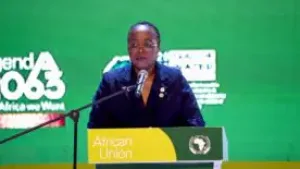
SADC Deputy Executive Secretary for Corporate Affairs, Dr Judith Kateera, said floods, droughts, tropical cyclones, wildfires, epidemics and other hazards continued to threaten lives, infrastructure, food security, public finances and economic development across the region and the continent.
Kateera said this during the inaugural International Conference on Disaster Risk Reduction and Resilience in Africa, held in Maputo, Mozambique, under the theme, “Scaling Proactive Governance and Strategic Investment for Disaster Risk Reduction and a Resilient Africa.”
She called for a shift in how governments approached disaster risk management, urging them to view preparedness and resilience-building as investments in economic development rather than emergency expenditure.
“We must approach disaster risk management not merely as an emergency expenditure, but as a productive capital investment that generates tangible economic returns,” she said.
Lakatips
Advertise on Lakatips
Reach readers following the national conversation
Display, sponsored placements and briefing slots — across politics, business and sport.
Kateera reaffirmed SADC’s commitment to supporting member states in strengthening preparedness, reducing vulnerabilities and building resilient communities capable of withstanding future shocks.
The conference was officially opened by Mozambique President Daniel Francisco Chapo, who is also the African Union Champion for Disaster Risk Management.
Chapo emphasised the need to mobilise resources, strengthen early warning systems, invest in resilient infrastructure and improve community preparedness to reduce the impact of disasters.
He said communities should be placed at the centre of disaster response efforts by ensuring they had access to the necessary resources, response plans, information and capacity-building support.
African Union Commissioner for Agriculture, Rural Development, Blue Economy and Sustainable Environment, Moses Vilakati, also called on African governments to translate their commitments on disaster risk reduction into concrete action.
Vilakati stressed the importance of stronger governance, strategic investment and sustainable financing in advancing disaster risk reduction and strengthening early warning systems.
“Investing in resilience is not a cost, but an essential safeguard for our economies, communities and development gains,” he said.
On the sidelines of the conference, Kateera and the SADC delegation met Mozambique’s National Institute for Disaster Risk Management and Reduction president, Luisa Celma Caetano Meque, to discuss regional preparedness for the anticipated El Niño phenomenon forecast for the 2026–2027 season.
The discussions focused on strengthening preparedness and response measures to mitigate the potential socioeconomic effects of the expected climate phenomenon.
The two sides also discussed the need to strengthen the SADC Humanitarian Emergency Operations Centre (SHOC) through sustainable and innovative resource mobilisation.
SADC further participated in the launch of the Fourth Biennial Report on the Programme of Action for the Implementation of the Sendai Framework for Disaster Risk Reduction 2015–2030 in Africa, covering the 2023–2024 period.
The report outlines progress made by African countries and regional organisations in reducing disaster risks, improving preparedness and building resilient communities.
WARNING! All rights reserved. This material, and other digital content on this website, may not be reproduced, published, broadcast, rewritten or redistributed in whole or in part without prior express permission from ZAMBIA MONITOR.
Source: Zambia Monitor — Read more
More to read
All Business →
ZRA seizes goods worth K22.5 million, impounds three stolen vehicles
The Zambia Revenue Authority (ZRA) and partner law enforcement agencies have seized assorted goods worth an estimated K22.5 million and impounded three vehicles confirmed to have been stolen outside Zambia during joint operations conducted from October 5 to 9. The operations were carried out across…

Zambia urged to strengthen waste controls over microplastic pollution risks
Environmental health advocate, Christopher Mtonga, has warned that microplastic pollution poses a threat to Zambia’s aquatic ecosystems and public health, calling for stronger waste management and pollution control measures. In a statement issued in Lusaka on Sunday, Mtonga said public discussions had largely focused on…
ZRA turns to data sharing to strengthen tax compliance
Zambia Revenue Authority (ZRA) is strengthening collaboration with public institutions through integrated digital systems to improve taxpayer identification, information sharing and compliance monitoring, Commissioner-General Dingani Banda has said. Banda said the authority was pursuing a whole-of-government approach that would enable public institutions to share relevant…