Business
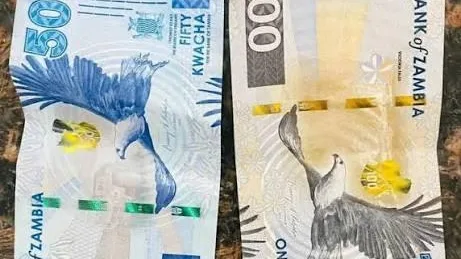
Is the value of a K100 becoming more like a K50?
Economic Expert Naylor Kopakopa has stated that
Picture: Zambian Business Times
Economic Expert Naylor Kopakopa has stated that the real value of money depreciates with inflation, meaning Zambians now need more Kwacha to buy the same goods they bought a few years ago.
In an interview with Zambian Business Times-ZBT, responding to questions on whether the value of a K100 is now becoming K50, Kopakopa said the real purchasing power of money must be assessed by looking at cumulative inflation over a period.
“The real value depreciates with inflation, so to know the real value of K100 three years later, you need to account for inflation over those three years and apply a discounting factor,” he said.
Kopakopa said if the discounting factor was 1.45, a consumer would need K145 to purchase the same quantity of goods that K100 could buy three years earlier.
“For example, if the discounting factor is 1.45, you need K145 to buy the same quantity of goods that you could buy with K100 three years ago,” he said.
Lakatips
Advertise on Lakatips
Reach readers following the national conversation
Display, sponsored placements and briefing slots — across politics, business and sport.
He said the cumulative movement in inflation means salaries and incomes must also increase significantly for households to maintain their purchasing power.
“For your information, since 2021 inflation has moved cumulatively by about 50%, and if compounded this figure can be 65%, meaning a K10,000 salary from five years ago would need to be K16,500 to maintain the same purchasing power,” he said.
Data from ZamStats monthly reports reviewed by the Zambian Business Times-ZBT shows that the Consumer Price Index increased from 377.25 in January 2023 to 556.26 in May 2026, representing a 47.4% increase in the general price level.
This means that K100 in January 2023 would require about K147 in May 2026 to purchase the same average basket of goods, while K100 today has purchasing power equivalent to about K68 in January 2023. Kopakopa said falling annual inflation does not automatically mean that prices have returned to previous levels, especially when incomes have failed to grow alongside prices.
“When they say inflation has reduced but ordinary citizens are not feeling it, it is because incomes have not grown at the same level as inflation in the last five years, so for citizens to feel the benefit of reducing inflation, income growth rates must for some time be higher than inflation growth rates,” he said.
Article by Philip Sinkala
Source: Zambian Business Times — Read more
More to read
All Business →
Manchester United’s winless run stretches to six after Leeds draw
Manchester United’s winless run extended to six matches in all competitions after Leeds United held Michael Carrick’s side to a draw at Elland Road. The result dealt another blow to Carrick, whose team arrived at the home of their long-standing rivals after a turbulent week…

ZCSA moves to expand consumer protection with 42 new proposed standards
The Zambia Compulsory Standards Agency (ZCSA) says it is consulting stakeholders on 42 proposed compulsory standards covering products ranging from food and chemicals to liquefied petroleum gas (LPG) and sanitary pads as part of efforts to strengthen consumer and environmental protection. ZCSA Public Relations Officer…
SADC urges investment in disaster resilience and financing mechanisms
The Southern African Development Community (SADC) has called for increased investment in long-term disaster resilience and sustainable financing mechanisms to minimise losses, protect livelihoods and help countries recover more quickly from disasters. SADC Deputy Executive Secretary for Corporate Affairs, Dr Judith Kateera, said floods, droughts…