Agriculture
African Seed Access Index (TASAI) Shares Findings of Assessment of Seed Sector in Zambia
The African Seed Access Index (TASAI), in

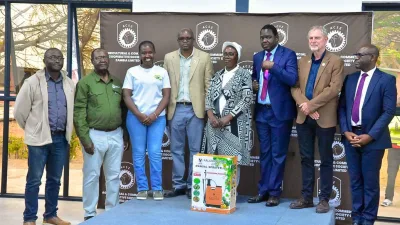
Picture: Zambian Business Times
The African Seed Access Index (TASAI), in collaboration with the Zambia Seed Trade Association (ZASTA) and the Seed Control and Certification Institute (SCCI), with support from the Technologies for African Agricultural Transformation (TAAT), convened a stakeholder workshop in Lusaka to disseminate findings from the 2025 Zambia Seed Sector Assessment.
The workshop brought together representatives from seed companies, government research and regulatory institutions, and regional agricultural organizations. The workshop highlighted the importance of Zambia’s seed industry to national and regional agricultural development.
ZASTA reaffirmed its commitment to coordinating private-sector participation and working with government and development partners to strengthen the country’s seed sector. The assessment found that Zambia’s formal seed sector is highly liberalized and largely private-sector driven.
Approximately 81% of active breeders are employed by private seed companies, which have accounted for about 95% of maize varieties and hybrids released since 2020. The assessment examined areas including variety release, early-generation seed, commercial seed availability, farmer access to quality seed, seed inspection, import and export regulations, counterfeit seed control, and the effectiveness of ZASTA.
Zambia achieved an overall score of 7.83 out of 10 across 15 indicators, slightly below the 7.89 recorded in 2023. Nevertheless, Zambia ranked third among the countries assessed, behind South Africa at 8.64 and Egypt at 8.13, reinforcing its position as one of Africa’s more advanced formal seed systems.
ZASTA received an average score of 7.17 in 2025, compared with 8.0 in 2023, indicating areas where further strengthening is required.
The workshop also provided an opportunity to validate priority interventions and collect additional information through the SeedSAT methodology, covering breeding and variety release, early-generation seed, commercial seed production and distribution, farmer awareness, quality assurance, policy and regulation, and national planning and coordination. The findings will help guide future interventions aimed at making Zambia’s seed industry more competitive, resilient and responsive to farmers’ needs.
Source: Zambian Business Times — Read more
More to read
All Agriculture →New Cattle Centre Boosts Sesheke Farmers
Cattle farmers in Maondo Chiefdom of Sesheke District in Western...

120 Tonnes of Soya Open Doors to China
CAMCO says Zambia’s first soybean consignment to China offers new market opportunities for local farmers...
Agro Input & Machinery Expo 2026 | Day 1 & 2 Highlights
Two days. One platform. A shared vision