Politics
Analysis: Could Türki̇ye Turn Back to China for Air Defense amid U.s. Pressure?
Revisit Chinese long-range air-defense systems if Washington imposes new sanctions or other punitive measures over growing tensions between Türkiye and Israel in Syria. Reports have suggested that Ankara could resume consideration of a Chinese FD-2000/HQ-9-family system, with a potential
Picture: Zambian Observer
ANALYSIS: COULD TÜRKİYE TURN BACK TO CHINA FOR AIR DEFENSE AMID U.S. PRESSURE?
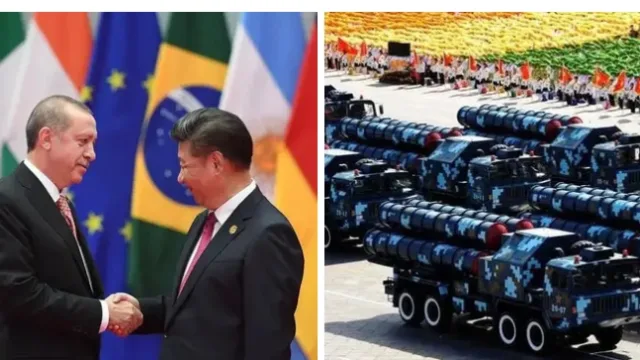
Türkiye could potentially revisit Chinese long-range air-defense systems if Washington imposes new sanctions or other punitive measures over growing tensions between Türkiye and Israel in Syria.
Reports have suggested that Ankara could resume consideration of a Chinese FD-2000/HQ-9-family system, with a potential deal reportedly valued at around $3.4–4 billion. However, the claim should be treated as speculative unless confirmed by Turkish or Chinese authorities.
The idea is not entirely without precedent. In 2013, Türkiye selected China Precision Machinery Import-Export Corporation (CPMIEC) for a proposed long-range air-defense system, based on the Chinese HQ-9 and marketed internationally as the FD-2000. The decision triggered strong concerns among Türkiye’s NATO allies, particularly over interoperability, cybersecurity and the compatibility of a Chinese system with NATO infrastructure.
The deal ultimately did not materialize, and Türkiye later pursued alternative options while continuing efforts to develop its domestic air-defense capabilities.
A renewed Turkish move toward China would therefore carry major strategic implications.
For Ankara, Chinese systems could provide an alternative source of advanced air-defense technology if access to Western equipment became restricted by sanctions or political pressure. It could also strengthen Türkiye’s bargaining position with Washington and European partners.
Lakatips
The morning briefing
Zambia’s news, before your first meeting
One email each morning with the headlines that matter, from every newsroom we follow. Free, and one click to stop.
For the United States and NATO, however, the acquisition of another Chinese strategic weapons system by a NATO member could raise serious concerns over interoperability, intelligence security and the integration of non-NATO equipment into Türkiye’s defense architecture.
The situation could become particularly sensitive if tensions between Türkiye and Israel continue to intensify over Syria.
At this stage, there is no confirmed evidence that Türkiye has formally decided to purchase the FD-2000 or another Chinese HQ-9 variant. If Ankara actually revived the program, however, it could mark another significant shift in the already complicated defense relationship between Türkiye, China, the United States and NATO.
The key question: Would U.S. sanctions push Türkiye closer to China or instead accelerate Ankara’s efforts to build a largely independent domestic air-defense network?
Source: Zambian Observer — Read more
More to read
All Politics →
GlobeInsightBlog: Your Gateway to Global News and Analysis
GlobeInsightBlog is a digital publication that delivers insightful, well-researched content on global trends, international affairs, and underreported stories. GlobeInsightBlog focuses on providing readers with clear, actionable analysis, bridging the gap between experts, policy discussions, and general audiences. Its goal is to make complex global issues…

FintechZoom.io: Expert Analysis for Smart Investing
FintechZoom.io is a cutting-edge financial research platform designed to provide investors, both novice and experienced- with real-time market data, in-depth analysis, and educational resources. It tracks major indices like the Nasdaq and the Dow Jones, monitors cryptocurrency trends, and offers insights into precious metals. By…

When Political Analysis Becomes Political Fiction: Sishuwa Sishuwa’s Dangerous Conspiracy Theory
Editor Zambia As usual, Sishuwa Sishuwa’s latest intervention, titled “The Quest for a Life Presidency: How Hichilema Plans to Destroy the Opposition,” is presented as political analysis, but reads less like sober scholarship and more like an elaborate political indictment constructed almost entirely