Technology
Can Tech replace people’s creativity
As artificial intelligence AI becomes increasingly embedded
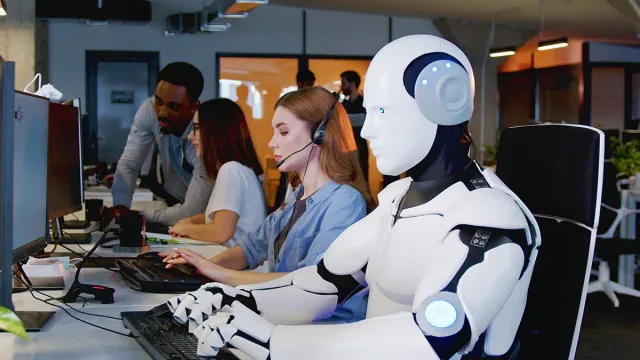
Picture: Zambian Business Times
As artificial intelligence AI becomes increasingly embedded in workplaces, schools and everyday digital life, concerns are growing over whether the technology could erode human creativity and critical thinking. But technology expert Brenda Zulu believes the real issue is not AI itself, but how people choose to use it.
Speaking in an exclusive interview with Zambian Business Times-ZBT, Zulu said AI is a powerful tool that can enhance productivity and support innovation when used responsibly, but stressed that it should never replace human judgment.
Her remarks come as debate over AI-generated content continues to intensify following a viral incident involving Canadian politician Bill Oliver, who accidentally read an AI-generated editing instruction while delivering a speech in the New Brunswick legislature, highlighting the importance of reviewing AI-generated material before using it publicly.
“I think there is AI for good and AI for bad,” Zulu said. She explained that the incident was not a failure of AI, but an example of why users must exercise human oversight whenever they rely on the technology. “With everything that we use AI for, we need to have what they call human oversight because AI is just learning,” she said.
Zulu dismissed fears that AI will create a generation incapable of thinking independently, saying the technology should instead be viewed as an assistant that helps people work more efficiently. According to her, learning how to write effective prompts is an important skill that enables users to get better results while still applying their own ideas and judgment.
Lakatips
The morning briefing
Zambia’s news, before your first meeting
One email each morning with the headlines that matter, from every newsroom we follow. Free, and one click to stop.
“If you want to come up with something, you can just learn how to prompt correctly. It is not that bad. Actually, it’s just like an assistant because you ask for assistance from other people,” she said.
She noted that AI can assist with tasks such as summarising lengthy documents, preparing presentations and improving productivity, making it a useful tool across different professions.
However, Zulu warned that AI can also be abused, pointing to the increasing use of deepfakes to spread misinformation and manipulate images of women and political leaders, particularly during election periods.
She said such cases highlight the need for ethical use of AI and for organisations to establish clear policies governing its application. “If you are an institution, you need to have a policy,” she said. Zulu also encouraged professionals and organisations to invest in quality AI tools where possible, noting that paid versions generally deliver better results.
She added that AI is already integrated into many of the digital platforms people use every day, making it unrealistic to avoid the technology altogether. “All your tools on your phone are now being controlled by AI. WhatsApp, everything. So how are you going to run away from AI?” she asked.
Zulu urged young people and professionals to embrace AI responsibly by developing prompting skills, using the technology ethically and ensuring that human judgment remains central to every decision.
Source: Zambian Business Times — Read more
More to read
All Technology →
Advancement in Artificial Intelligence calls for clear regulations
Technology expert Ali Kingston Mwila has called
AI more than future tech: How Zambia can harness artificial intelligence for economic growth, by Kenneth Lutena
No matter how small or large an economy is, the use of modern technologies such as artificial intelligence (AI) is an inevitable tool for achieving key economic milestones. This calls for scalable and robust information and communication technology (ICT) infrastructure to support the widespread roll-out…
Mynced: Redefining Personalized Technology Today
Mynced is an emerging term defining the future of personalized digital living. It represents a highly integrated ecosystem where artificial intelligence, technology, and user data work together to deliver experiences tailored to individual needs. It continuously adapts across devices and platforms, anticipating user preferences and…