Technology
China Court Rules AI Replacement Does Not Give Employers Free Rein to Fire Workers
A Chinese court has ruled against a company that dismissed an employee after artificial intelligence took over much of the work he had been doing.The case involved a technology worker identified only as Zhou, who had been earning 25,000 yuan per month…
By ZR Reporter
A Chinese court has ruled against a company that dismissed an employee after artificial intelligence took over much of the work he had been doing.The case involved a technology worker identified only as Zhou, who had been earning 25,000 yuan per month about K69,700 at current exchange rates as a quality assurance supervisor.
His duties involved checking the accuracy and safety of content produced by artificial intelligence systems.
According to Chinese court records, the company later moved to restructure the work after AI took over many of his responsibilities. Zhou was offered a lower-level position with his monthly salary reduced to 15,000 yuan, equivalent to about K41,800.
He rejected the proposed change, after which the company terminated his employment.
Lakatips
The morning briefing
Zambia’s news, before your first meeting
One email each morning with the headlines that matter, from every newsroom we follow. Free, and one click to stop.
Zhou challenged the decision through China’s labour dispute system, arguing that the company’s adoption of AI did not automatically make his employment contract impossible to continue.
The Hangzhou Intermediate People’s Court upheld the finding that the dismissal was unlawful and ordered the company to provide additional compensation. The ruling does not prevent Chinese companies from adopting artificial intelligence or restructuring their operations.
Instead, the case establishes an important distinction: a company’s decision to introduce AI is not, on its own, enough to remove an employee’s existing labour protections.
The case has attracted attention as businesses around the world increasingly use AI to automate tasks previously performed by people.
For workers, the ruling raises a much bigger question about the future of employment: when a company chooses technology to reduce its reliance on human labour, how much of the cost of that decision should be carried by the worker?
© Zambia Reports | August 2026
Source: Zambia Reports — Read more
More to read
All Technology →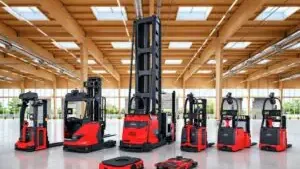
Techbytes: African e-logistics firm Bisedge secures €10m from Finnfund to expand electric forklifts (Tech in Africa)
African electric logistics company, Bisedge, has secured €10 million ($11.2 million) in debt financing from Finnfund, Finland’s development finance institution, to expand its electric industrial equipment operations across Africa. The investment marks Finnfund’s first electric vehicle financing deal on the continent and establishes a strategic…

How to Fix Laptop Green Screen: 9 Proven Solutions
A laptop screen that turns green does not always need a replacement. The same symptom can come from a corrupted graphics driver, an incorrect color profile, a damaged LCD cable, or a failing display panel. The challenge is identifying which component is responsible before spending…

Techbytes: NeoFleet Capital raises $4 million to finance taxi fleets in Africa (Africa in Tech)
NeoFleet Capital, a Cyprus-based mobility fintech company that finances taxi fleets in emerging markets, has raised US$4 million in a pre-seed funding round combining equity and debt. According to Tech publication, former inDrive executive Mark Loughran has joined the company as president and co-founder. Africa…