Business
Explaining Zambia’s Landmark Grid Resilience Programme and Debt-for-Energy Deal
Zambia has launched a major 15-year plan to improve its electricity system. The main goal is to make power more reliable, reduce blackouts, and expand electricity access across the country. But what makes this project special is how it is being…
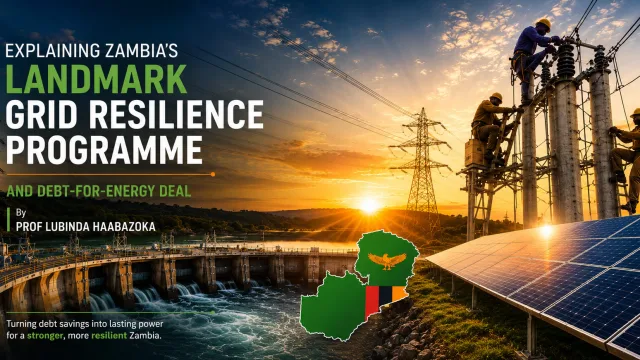
Picture: Mwebantu
By Prof Lubinda Haabazoka
Zambia has launched a major 15-year plan to improve its electricity system. The main goal is to make power more reliable, reduce blackouts, and expand electricity access across the country. But what makes this project special is how it is being funded.
Turning Debt Savings into Electricity Investment
Zambia previously owed a large amount of money on international debt (a US$1.365 billion bond due in 2053). Instead of continuing to pay that debt as before, the government has restructured it, basically renegotiated and “bought it back” with support from:
The African Development Bank (AfDB) African Development Bank
The Bank of Zambia Bank of Zambia
This restructuring has freed up money that would have gone to debt payments.
Lakatips
Advertise on Lakatips
Reach readers following the national conversation
Display, sponsored placements and briefing slots — across politics, business and sport.
Now, instead of using those savings to pay creditors, Zambia will invest about US$275 million over 15 years into improving its electricity grid.
This approach is called a debt-for-energy conversion, meaning debt savings are turned into real infrastructure projects.
What the Project Will Do
The new programme, called the Grid Resilience Programme, will focus on fixing and upgrading Zambia’s electricity network.
Key goals include:
– Reducing power losses in the system (less wasted electricity)
– Fixing weak or overloaded parts of the grid
– Expanding electricity access to more communities
– Supporting renewable energy like solar power and battery storage
– Making electricity supply more stable and reliable
In simple terms: get more electricity to more people, with fewer outages and less waste.
Why This Matters for the Economy
Reliable electricity is important because it affects almost everything:
– Mining (especially copper production)
– Farming and food processing
– Manufacturing industries
– Small businesses
– Hospitals, schools, and homes
– Internet and digital services
If electricity improves, businesses can grow, jobs can increase, and the economy becomes more competitive.
Who Will Run the Project
The programme will be coordinated by:
GreenCo Power Services
And implemented through a new institution called:
ZamGridCo (a newly created government-linked company)
A board made up of both government and private sector experts will oversee it to ensure transparency and efficiency.
Bigger Picture
Zambia is trying to do three things at once:
– Fix its electricity problems
– Manage its national debt better
– Support long-term economic growth
This project is part of a shift from focusing on debt repayment to focusing on investment in infrastructure that helps the economy grow.
In One Sentence
Zambia has turned some of its debt savings into a long-term plan to upgrade the electricity system so the country can have fewer blackouts, more reliable power, and stronger economic growth.
Source: Mwebantu — Read more
More to read
All Business →
Manchester United’s winless run stretches to six after Leeds draw
Manchester United’s winless run extended to six matches in all competitions after Leeds United held Michael Carrick’s side to a draw at Elland Road. The result dealt another blow to Carrick, whose team arrived at the home of their long-standing rivals after a turbulent week…

ZCSA moves to expand consumer protection with 42 new proposed standards
The Zambia Compulsory Standards Agency (ZCSA) says it is consulting stakeholders on 42 proposed compulsory standards covering products ranging from food and chemicals to liquefied petroleum gas (LPG) and sanitary pads as part of efforts to strengthen consumer and environmental protection. ZCSA Public Relations Officer…
SADC urges investment in disaster resilience and financing mechanisms
The Southern African Development Community (SADC) has called for increased investment in long-term disaster resilience and sustainable financing mechanisms to minimise losses, protect livelihoods and help countries recover more quickly from disasters. SADC Deputy Executive Secretary for Corporate Affairs, Dr Judith Kateera, said floods, droughts…