Agriculture
FRA intensifies maize procurement and storage
The Food Reserve Agency is stepping up maize procurement and storage in Chililabombwe and Ndola to ease depot congestion and protect grain stocks ahead of the rainy season.
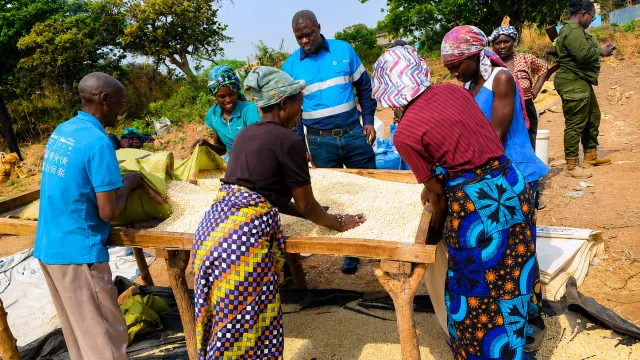
Picture: Times of Zambia
The Food Reserve Agency (FRA) has intensified maize procurement and storage measures in Chililabombwe and Ndola districts as part of efforts to protect grain stocks and ease congestion at satellite depots ahead of the rainy season.
In Chililabombwe District, the FRA had procured 38,166 bags of maize as Tuesday this week.
Chililabombwe District Commissioner Kelly Jibinga has challenged FRA staff to remain committed to duty in order to avoid congestion at depots.
Mr Jibinga has also directed the agency to immediately procure tarpaulins and tents to protect purchased maize from early or unexpected rains at satellite and holding depots.
Speaking when he checked selected depots in Chililabombwe, Mr Jibinga said he was pleased with the efficiency exhibited by FRA staff and the payment system for farmers who had supplied maize, which had minimised complaints.
Lakatips
The morning briefing
Zambia’s news, before your first meeting
One email each morning with the headlines that matter, from every newsroom we follow. Free, and one click to stop.
He said about 2,700 bags of maize had been moved from Chililabombwe to FRA storage facilities in Chambishi and Chingola, adding that the exercise would continue.
Mr Jibinga said that the procurement exercise was ongoing and reaffirmed Government’s determination to secure all grain stocks in the event of rains.
He further disclosed that plans were underway to construct permanent storage structures and shelters for maize.
Meanwhile, Ndola District Commissioner Precious Njekwa says she will ensure that the transportation of maize from satellite depots to main FRA storage facilities is addressed before the onset of the rainy season.
Speaking when she addressed farmers at Minsundu Kavu, Turgagan and Mukulingwe depots in Ndola yesterday, Ms Njekwa said maize sacks needed to be moved to safer storage facilities before the rains begin.
Ms Njekwa said she had heard concerns from farmers who had not yet sold their maize to the FRA due to a lack of space at the depots.
She said she would channel the matter to the Copperbelt Province Permanent Secretary for onward submission to the relevant authorities so that the transport challenge could be addressed.
Ms Njekwa also urged satellite depot clerks to prioritise elderly people, pregnant women and persons with disabilities to prevent them from spending long hours waiting at depots.
“Please, let us allow pregnant women and the elderly to sell their maize on time. Those people cannot stand for long hours. Assist them so that they can go back home,” she said.
She further urged depot clerks to ensure that farmers within cooperatives and those under the Farmer Input Support Programme were given priority when selling their maize to the FRA.
Earlier, Minsundu farmer Kangwa Bwembya said delays by the FRA to collect maize stocked at satellite depots had affected farmers wishing to sell their produce.
Mr Bwembya appealed to the FRA to send more trucks to collect maize from satellite depots.
Another farmer, Stanley Masheka, called on the agency to create more depots and employ additional workers in order to reduce the time farmers spend waiting to sell their maize.
Nationally, the FRA aims to purchase a minimum of 500,000 metric tonnes of white maize and 10,000 metric tonnes of paddy rice.
The agency has also planned more than 1,700 satellite depots across 116 districts to improve farmer access and protect crops before the rainy season.
Source: Times of Zambia — Read more
More to read
All Agriculture →
120 Tonnes of Soya Open Doors to China
CAMCO says Zambia’s first soybean consignment to China offers new market opportunities for local farmers...

Agro Input & Machinery Expo 2026 | Day 1 & 2 Highlights
Two days. One platform. A shared vision
Is growing rain-fed wheat a non-starter?
Livingstone Cooperatives Union (LCU) has indicated that