Opinion Opinion
From prison stigma to businesswoman
After seven months in custody, Maureen Chaboloka faced stigma and rejection when she returned to her community, but with determination and support, she rebuilt her livelihood, started a business and now helps other women in prison prepare for life after release.
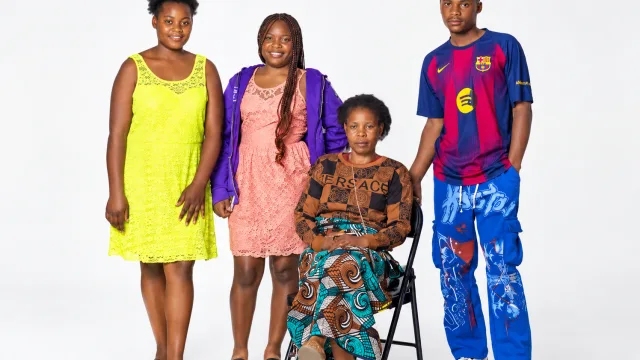
Picture: Times of Zambia
Maureen Chaboloka’s story
When Maureen Chaboloka walked out of Chimbokaila Prison after spending seven months in custody, she stepped into a world that, in many ways, was as difficult as the one she had just left.
The stigma came quickly.
People who knew she had been in prison looked at her differently. Potential employers turned her away. Some branded her a criminal without knowing her circumstances.
But Ms Chaboloka refused to allow the experience to define the rest of her life.
Lakatips
The morning briefing
Zambia’s news, before your first meeting
One email each morning with the headlines that matter, from every newsroom we follow. Free, and one click to stop.
A mother of five and a single parent, she knew she had children depending on her. She had bills to pay, rent to meet and a family to support.
So, instead of surrendering to the labels, she went back to work.
“People should not stigmatise someone who comes out of prison, they should help that person instead,” she said.
The road back to economic independence, however, was not easy.
Unable to secure formal employment because of the stigma surrounding her past, Ms Chaboloka turned to piecework in her community to raise money.
She also received support from the Prisons Care and Counselling Association (PRISCCA), which helped her work towards rebuilding her livelihood.
Slowly, she raised enough money to start pursuing business opportunities.
She began travelling to Tanzania, South Africa and Botswana to source different products, including clothes, home appliances and hardware products.
What started as an attempt to rebuild her life eventually grew into Brave Choice, a general supplying business.
Today, Ms Chaboloka has four employees, three women and one man, who work in the field and help run the shop.
She is looking to expand the business and create more opportunities for others.
But for Ms Chaboloka, the transformation did not begin with the business.
It began while she was in prison.
She said her time in custody gave her an opportunity to strengthen her faith in Christ. She became involved in prayer and preached to fellow inmates.
More importantly, she said the experience taught her to look at life differently.
She came to believe that people have skills and abilities that can help them change their circumstances if they are determined and willing to try.
She also learnt the importance of working for what one wants rather than simply waiting for assistance.
“Sometimes people, when they go in prison, they come reformed. They learn a lot of things,” she said.
For Ms Chaboloka, that transformation could only become meaningful if society was prepared to receive former inmates back into the community.
As a Christian nation, she said Zambia should demonstrate compassion towards people who have completed their encounters with the criminal justice system.
“People should know how to receive their fellow citizens when they are out of prison, help them, encourage them, teach them and understand them,” she advised.
Her message is particularly directed at women who may find themselves overwhelmed by stigma, rejection and financial hardship after prison.
“Those who are out of prison should not quit working hard, they should not look back at people laughing at them but instead find their motivation to work hard,” she said.
For her, motherhood was a powerful motivation.
With five children depending on her, giving up was not an option.
“I had to work hard to provide for my family,” she said.
Her experience has also led her to give back to other women who are still in custody.
Ms Chaboloka is now a Community Welfare Assistance Committee (CWAC) member in her ward in John Laing, Kanyama Constituency, and is also a member of PRISCCA.
Through PRISCCA, she visits inmates and encourages them, drawing from her own experience to remind them that prison does not have to determine the rest of their lives.
Her journey has therefore come full circle.
She once walked out of prison facing stigma and uncertainty. Today, she is running a business, employing other people and returning to encourage those who remain behind the prison walls.
The wider challenge
According to Dr Godfrey Malembeka, executive director and founder of PRISCCA, women leaving prison need to take advantage of opportunities available to them rather than allowing self-stigma to become another barrier.
Dr Malembeka said former inmates should first overcome the belief that they are incapable of rebuilding their lives.
“Ex-convicts should not accept self-stigma. They must defeat self-stigma. They must stand up and say they can still make it,” he said.
He encouraged former female inmates to organise themselves into small groups and seek assistance from civil society organisations, counsellors, traditional leaders, churches and elected leaders.
Rather than waiting for assistance to come to them, Dr Malembeka said women should actively seek programmes that could help them establish sustainable livelihoods.
He suggested that former inmates could work together in groups of two or three and approach organisations such as PRISCCA, other civil society organisations and counsellors for help in developing simple business plans.
Those plans, he said, could position them to benefit from available financial support, including small grants or loans.
Dr Malembeka specifically pointed to the Constituency Development Fund (CDF) and other community-based opportunities as potential avenues for women seeking to restart their lives.
He also encouraged former inmates to engage traditional and political leaders, churches and market leaders who may be able to connect them to available programmes.
For women who meet the eligibility requirements, social protection programmes such as the Social Cash Transfer may provide another possible source of support, he said.
Those who do not qualify for cash transfers may explore other forms of livelihood support, including soft loans and opportunities identified through local leadership structures.
For Ms Chaboloka, however, the message is simple: a prison record or a difficult past should not be allowed to become the final chapter of a person’s life.
Her own journey from Chimbokaila Prison to entrepreneurship is evidence, she says, that with determination, support and an opportunity to rebuild, life can begin again.
And now, having rebuilt her own life, she is using her experience to encourage others still waiting for their second chance.
Source: Times of Zambia — Read more
More to read
All Opinion →
Mwamba Peni Seeks Immediate Release from Police Custody
Former Permanent Secretary for Special Duties Mwamba Peni has asked the High Court to order...
Mukandila Seeks Court Order for Release after 14 Days in Custody
Tonse Alliance Secretary General Celestine Mukandila is seeking a court order for his release after...
Mundubile’s Bodyguard Very Alive, in Police Custody Says Chishala Kateka
MUNDUBILE’S BODYGUARD VERY ALIVE, IN POLICE CUSTODY SAYS KATEKA. Richard Banda, the bodyguard to opposition politician Brian Mundubile, is alive and remains in police custody, despite earlier reports circulating on social media and through some media outlets claiming that he had been killed. Opposition politician…