Zambia
Government Challenges EU Election Observation Report
Government has challenged parts of the European Union Election Observation Mission’s final...
Picture: Zambia24
By Ellen Hambuba
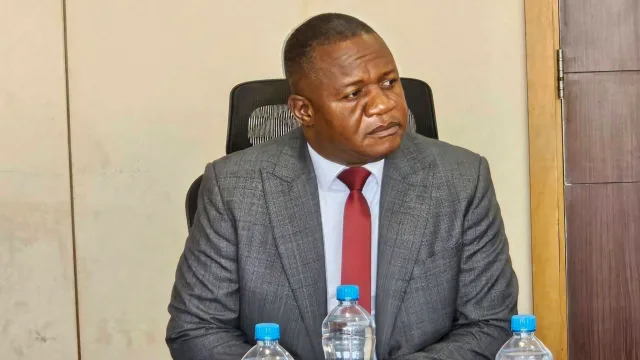
Government has challenged parts of the European Union Election Observation Mission’s final report on Zambia’s 2026 General Elections, arguing that some of its findings do not fully reflect the country’s constitutional history, institutional realities and security situation.
Chief Government Spokesperson ELVIS NKANDU says Government believes the report would have been more balanced had relevant institutions been given sufficient opportunity to explain the circumstances surrounding some of the issues raised.
Mr. NKANDU says Government appreciates the Mission’s recognition that the August 13 elections offered Zambians a competitive choice, polling staff administered voting efficiently, the Electoral Commission of Zambia was well prepared and the legal framework provided a broadly adequate basis for democratic elections.
He, however, says Government has reservations about some of the report’s conclusions and recommendations.
Lakatips
For Zambian newsrooms
Your reporting, credited and linked back
Join the newsrooms whose work reaches readers through Lakatips — your name on every story, and a route straight back to you.
One of the concerns raised by the EU Mission relates to constitutional and electoral reforms undertaken ahead of the 2026 General Election.
Mr. NKANDU disputes the impression that introducing constitutional and electoral amendments during an election year was unusual under President HAKAINDE HICHILEMA’s administration.
He says Zambia has a history of undertaking significant constitutional reforms during election years under successive administrations.
Mr. NKANDU cites constitutional changes under First Republican President KENNETH KAUNDA, which introduced the One-Party State and later restored multiparty democracy ahead of the 1991 elections.
He also points to amendments introduced by former President FREDERICK CHILUBA in 1996, including the parentage clause, as well as constitutional reforms undertaken under former President EDGAR LUNGU in 2016.
The 2016 reforms included the introduction of the 50-per-cent-plus-one electoral threshold and the running mate clause.
Mr. NKANDU says the 2026 reforms under President HICHILEMA, which included provisions relating to proportional representation, should therefore be assessed against this historical background.
Government has also disputed the report’s conclusion that the Zambia National Broadcasting Corporation –ZNBC- was overwhelmingly biased towards the incumbent during the electoral period.
Mr. NKANDU, who is also Information and Media Minister, says the assessment would have benefited from direct engagement with ZNBC to establish the broadcaster’s statutory mandate, editorial obligations and operational practices.
He says ZNBC provides commercial airtime to all political parties and stakeholders on equal commercial terms, allowing opposition parties to purchase airtime for campaign messages and political advertising.
Mr. NKANDU says the extent to which political parties utilised this opportunity is a matter of record.
He further explains that ZNBC has a statutory responsibility to inform the public about Government programmes, policies, public services and development activities.
Mr. NKANDU says the President, as Head of State and Government, is naturally the principal messenger of public policy implementation.
He argues that coverage of presidential activities should therefore be understood as part of reporting Government business and national governance responsibilities, rather than evidence of partisan preference.
The Minister adds that coverage of sitting Presidents has been a longstanding practice at ZNBC, predating the current administration and extending across successive governments.
On security-related concerns raised in the report, Mr. NKANDU says election observers can only assess what they directly witness and may not have access to intelligence, security information and ongoing law enforcement investigations.
He says some political actors and their supporters were under investigation over serious allegations of criminal conduct during the electoral period.
According to Mr. NKANDU, some of the alleged activities were prohibited under Zambian law and raised concerns about public order and national security.
He says the Mission may not have fully understood the circumstances behind certain decisions and actions taken by State agencies without structured engagement with relevant Government institutions.
Mr. NKANDU, however, says this does not diminish the importance of election observation but highlights the need for balanced consultation and a better understanding of local circumstances before definitive conclusions are reached.
On freedom of expression and media freedom, Mr. NKANDU says Government remains committed to protecting the constitutional rights of all citizens.
He says Zambia has a vibrant and diverse media environment, comprising public, private, community and online platforms that express different views, including criticism of Government.
Mr. NKANDU says the robust public debate on national affairs demonstrates the strength of democratic discourse in the country.
Government has also reiterated its willingness to engage the European Union, political parties, civil society organisations, media institutions and citizens in strengthening Zambia’s democratic processes.
Mr. NKANDU says although Government respects the EU Mission’s observations and recommendations, it believes a fuller understanding of Zambia’s constitutional history, institutional realities, media landscape and security environment would have produced a more balanced assessment.
He says Zambia’s democratic journey is not perfect or complete but is characterised by peaceful political transitions, constitutional development, expanding political participation and a continued commitment to democratic governance.
Source: Zambia24 — Read more
More to read
All Zambia →
Govt Fast-Tracks Life Project
Dr Chibamba pushes for 2027 plantation rollout as Zambia seeks jobs, private investment and value...
Moody’s upgrades Zambia
Caa1 rating reflects progress in debt restructuring, fiscal consolidation – Govt CHOMBA MUSIKA Lusaka GOVERNMENT says Moody’s Ratings’ upgrade of the country’s sovereign credit rating from Caa2 to Caa1 is another step in the country’s recovery from the debt distress that culminated in its 2020…
Moodys Upgrades Zambias Credit Rating
Zambia’s international credit standing has received a boost following an upgrade by Moody’s Ratings, which...