Health
‘Investigate the rising defilement cases,’ SRHR journalists challenged.
AMID the rising number of defilement and sexual abuse cases, a youth advocate has called on journalists who report on health matters to conduct in-depth investigative reporting to uncover the underlying causes of these incidents. Lately, hardly a day passes by without a police report…
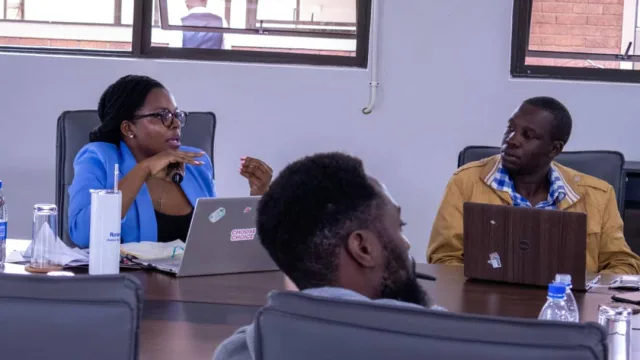
Picture: Mwebantu
AMID the rising number of defilement and sexual abuse cases, a youth advocate has called on journalists who report on health matters to conduct in-depth investigative reporting to uncover the underlying causes of these incidents.
Lately, hardly a day passes by without a police report of defilement, rape among other sexual related crimes.
Speaking on the sidelines of the regional media orientation on sexual reproductive health rights in Harare, Zimbabwe, Tatenda Songore said it is not enough for journalists to report statistics, but they should go beyond and uncover the underlying issues beyond these crimes.
“The first most important ingredient for journalists to have balanced factual stories is investing in them to be able to go and investigate the stories,” he said, “they need to be equipped with resources to be able to go and see the reality where these stories are happening.
“Often times, when an announcement is done by the police they [journalists] are just reporting what has been done, but these cases are entrenched a lot of traditional and cultural practices that have been there for generations, harmful norms that are perpetrating violence against children.”
Lakatips
The morning briefing
Zambia’s news, before your first meeting
One email each morning with the headlines that matter, from every newsroom we follow. Free, and one click to stop.
The media orientation which was attended by journalists from Zambia, Kenya, Malawi, Uganda and Zimbabwe was aimed at exposing reporters to the current global pushback on reproductive health.
The orientation was hosted by Hivos under the Regional Sexual and Reproductive Health and Rights (SRHR) Fund Program.
Meanwhile, Hivos policy, advocacy and campaigns programmes officer Kudzai Meda said the globe has noticed increasing pushback against reproductive health rights, negating the gains that have been made in the past.
“Across the globe and within our own region, we are witnessing increasing resistance and pushback against the hard-won gains in reproductive health and rights. These shifts threaten not only the progress we have made, but also the dignity, health, and autonomy of countless individuals—especially women, girls, and marginalized communities.
“It is in this context that the role of the media becomes ever more critical. You are not only storytellers—you are powerful agents of change. The narratives you craft, the truths you amplify, and the questions you raise have the power to shape public opinion, influence policy, and dismantle harmful norms,” Meda said.
(Mwebantu, Saturday, 19th April, 2025)
Source: Mwebantu — Read more
More to read
All Health →UTH Offering Mothers Labour Pain Relief
The University Teaching Hospital (UTH) Women and Newborn Hospital has performed more...
SADC Urges Joint Efforts on Universal Health Coverage
The Southern African Development Community (SADC) has called for concerted efforts to achieve universal health coverage. Speaking during the closing session of the Inter-Regional Economic Communities Meeting on Health Emergency Preparedness, Response and Resilience in Lusaka, SADC Head of Health Dr Lamboly Kumboneki said Africa…
Audit Uncovers K1.4 Billion Procurement Irregularities at ZAMMSA
An audit at the Zambia Medicines and Medical Supplies Agency, ZAMMSA, has...