Business
More investments in alternative energy needed ahead of El NiñoTOURISM
Zambia is accelerating private investment in solar and coal power to diversify its energy mix and avert an anticipated El Niño-induced drought, as the country races to meet a 1,000 MW solar target by late 2026.
Picture: Times of Zambia
Policy Analysis
with Kennedy Mupeseni
More investments in alternative energy sources are needed as Zambia faces an anticipated El Niño-induced drought and delayed rainfall for the 2026/2027 season, threatening agriculture, food security, and power generation.
Notable progress has been made to commit and lure more private investments into the energy sector.
Private sector involvement in Zambia’s solar and coal energy sectors is rapidly expanding as independent power producers (IPPs) step in to close national power deficits and diversify away from climate-vulnerable hydropower.
Lakatips
The morning briefing
Zambia’s news, before your first meeting
One email each morning with the headlines that matter, from every newsroom we follow. Free, and one click to stop.
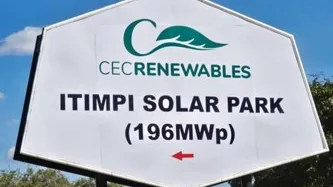
In terms of solar energy, private developers are driving massive solar installations, such as the Copperbelt Energy Corporation (CEC) expanding the Itimpi solar plant in Kitwe to 196 MW total capacity, and major grid-connected sites like the Chisamba solar station.
CEC is looking at reaching over 500 MW of solar generation capacity by 2027 through its subsidiary CEC Renewables.
CEC is through the national utility Zesco.
CEC’s solar contribution to the grid is 230 MW as the result of the recent commissioning of the 136 MW Itimpi II solar plant.
This adds to earlier projects like the 60 MW Itimpi I and 34 MW Riverside plants respectively.
The country is on track to meet the 1,000 MW of solar energy by late 2026, aiming to diversify the energy mix thereby reducing reliance on hydropower.
According to ZESCO Limited, the country has already achieved about 700 MW of its solar goal and expects to reach the full 1,000 MW target.
CEC is through the solar power projects it is co-developing with ZESCO that will split into two 250 MW phases in partnership with
Major pipeline projects ,include the 100 MW Mailo Solar Power Plant which is partially active, the Chipata West 100 MW plant built by CMEC, a 100 MW pilot project partnership with Longi Solar, and planned projects like the Kasama solar development whose implementation should be accelerated.
The country’s broader vision is to scale up total national generation capacity up to 10,000 MW by 2031 through a mix of solar, hydro, and clean thermal options.
In terms of coal energy involvement and its base load stabilization, coal has been identified as crucial in helping manage severe power shortages and stabilize supply for industrial and mining operations.
The Government is accelerating coal development alongside renewables.
Key players and projects include Maamba Collieries’s Maamba Energy Limited operating as a major thermal plants, and new heavy private investments—such as planned 300 MW to 600 MW private coal expansions and projects backed by firms like Vedanta Resources which are underway.
This will help guarantee stable base load power.
To accelerate the pace of project implementations, the Ministry of Energy has hinted that it reduced the project approval waiting period from over six months down to just 48 hours to accelerate private sector participation.
Another component which is critical in creating a base load is the investments in battery storages.
Companies like CEC are integrating Battery Energy Storage Systems (BESS) to turn intermittent solar power into dependable, dispatchable base load energy.
The private sector are also leveraging on the open access market that has liberalized the energy industry.
As result of that there has been emerging power traders and alternative entities like GreenCo that are facilitating solar power trading under newly opened market access rules.
The private sector has critical role to play in the country’s green transition agenda as climate change continues raking havoc to key sectors of the economy such as agriculture and energy. Private coal investments is offering immediate reliability for the mining sector, though policy makers face the ongoing challenge of balancing this fossil-fuel reliance with Zambia’s economic and environmental goals.
There is a need to reduce the dependency on hydro power by injecting more resources towards diversification of the energy sector.
In terms of rainfall outlook, Southern, Western, and Lusaka provinces expect below-normal rainfall and dry spells, while northern areas may see normal to above-normal precipitation.
In terms of food security, it is estimated that approximately 1.2 million people face potential acute food insecurity between October 2026 and March 2027.
Other sector impacts include reduced water levels that threaten hydropower generation, while smallholder farmers face higher production costs and crop stress.
In terms of preparedness and mitigation actions, Government has activated multi-sectoral contingency plans and relief programmes, urging early preparation rather than panic.
Heavy investments in solar and coal fired power projects is likely to insulate the country from the adverse weather.
History has shown that it is possible to overcome the energy crisis amidst the adverse weather conditions if more investments are committed in renewable energy projects.
The mines and the energy sectors should work together to find solutions to overcome the energy demand and make all the energy projects bankable.
On the other hand, the open access if well utilized by the private sector can help in rolling out energy infrastructure as the country looks at the generating 10,000 megawatts by 2031.
Going forward, increased investments in expansion of transmission lines while investing in battery storage technologies to create a resilient energy industry will be crucial in making the country’s energy sector more resilient.
Source: Times of Zambia — Read more
More to read
All Business →
Plan with El Niño in mind – Chilengi
Minister says health sector should factor in floods, droughts FUMBE CHANDA Lusaka MINISTER of Health Roma Chilengi says health planning for 2027 should take into account potential floods and droughts associated with El Niño, which can disrupt service delivery. Meanwhile, Minister of Green Economy and…
Seeds Available, Markets Missing
Farmers urge Government to open FRA to indigenous crops as drought fears, declining traditional varieties...
The black-cheeked lovebird: Zambia’s rare gem
The bird is found mainly in southwestern Zambia, where it depends on mopane woodland and reliable water sources. Habitat loss and drought pose a threat to its survival.