Technology
Zambia has 4k Telecom towers, so why are networks still failing?
According to official government data, the total
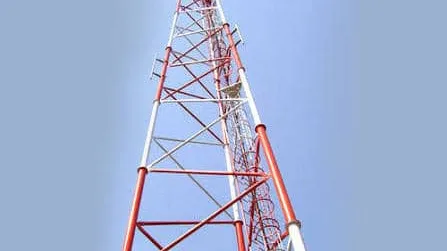
Picture: Zambian Business Times
According to official government data, the total number of telecommunications towers in Zambia increased by about 12%, from 3,546 at the end of June 2025 to 3,963 (about 4k) at the end of June 2026, representing an additional 417 towers over the review period.
A check by the Zambian Business Times—ZBT, on the ZICTA ICT Sector 2026 Mid-Year Report, shows that the growth in tower infrastructure indicates continued investment in telecommunications infrastructure, including the expansion of infrastructure supporting mobile and other electronic communications services.
Meanwhile, speaking in an interview with ZBT, Internet Society Zambia Chapter (ISOC) President, Levy Syanseke indicated that although the 3,963 towers represent progress, the infrastructure remains insufficient for Zambia’s geographical size and growing demand for reliable connectivity.
“Three thousand nine hundred and sixty-three towers is an improvement but still low density for Zambia’s size, and the increase of 417 towers is encouraging, although much of the investment may be concentrated in already developed areas while rural communities continue to experience limited high-speed connectivity,” said Syanseke.
He added that the challenge is not only the number of towers but also the technology and infrastructure supporting them, particularly in rural areas where 3G remains dominant and many sites rely on microwave backhaul instead of fiber.
Lakatips
The morning briefing
Zambia’s news, before your first meeting
One email each morning with the headlines that matter, from every newsroom we follow. Free, and one click to stop.
“Having a tower does not automatically mean having usable broadband, because a site can provide coverage while struggling to handle thousands of users at peak times, especially where the backhaul capacity is limited,” said Syanseke.
However, he identified power supply, extreme weather, and backhaul infrastructure as some of the major barriers that could affect the reliability of telecommunications services, particularly in rural areas where towers may depend on diesel generators and batteries during prolonged power outages.
“Power remains a major issue, while heavy rains can cut roads and damage fiber infrastructure, and microwave links can also experience capacity and reliability challenges, meaning that some towers may remain physically standing but still fail to provide reliable internet services,” said Syanseke.
The ISOC president has therefore called for stronger safeguards, including hybrid power systems using solar and batteries, all-weather access plans for towers in flood-prone areas, and greater protection of fiber infrastructure during road construction, while urging ZICTA to consider publishing a public dashboard showing the operational status of telecommunications towers across the country.
“Zambia needs to move beyond simply counting towers and focus on whether those towers are consistently on-air and capable of delivering reliable broadband, because citizens need connectivity that works when they need it, not just infrastructure that exists on paper,” he emphasized.
Article by Philip Sinkala
Source: Zambian Business Times — Read more
More to read
All Technology →
Techbytes: African e-logistics firm Bisedge secures €10m from Finnfund to expand electric forklifts (Tech in Africa)
African electric logistics company, Bisedge, has secured €10 million ($11.2 million) in debt financing from Finnfund, Finland’s development finance institution, to expand its electric industrial equipment operations across Africa. The investment marks Finnfund’s first electric vehicle financing deal on the continent and establishes a strategic…

How to Fix Laptop Green Screen: 9 Proven Solutions
A laptop screen that turns green does not always need a replacement. The same symptom can come from a corrupted graphics driver, an incorrect color profile, a damaged LCD cable, or a failing display panel. The challenge is identifying which component is responsible before spending…

Techbytes: NeoFleet Capital raises $4 million to finance taxi fleets in Africa (Africa in Tech)
NeoFleet Capital, a Cyprus-based mobility fintech company that finances taxi fleets in emerging markets, has raised US$4 million in a pre-seed funding round combining equity and debt. According to Tech publication, former inDrive executive Mark Loughran has joined the company as president and co-founder. Africa…