Business
21 compounds receive minimum 10 hours of power daily
ENERGY Minister Makozo Chikote has announced that 21 high-density compounds have been selected to receive a minimum of 10 hours of electricity per day, as
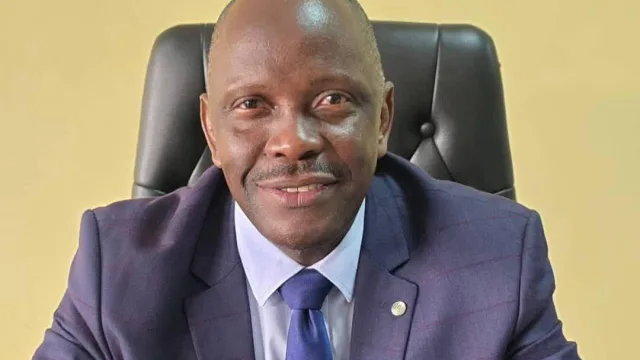
Picture: Kalemba
ENERGY Minister Makozo Chikote has announced that 21 high-density compounds have been selected to receive a minimum of 10 hours of electricity per day, as part of an ongoing phased intervention to support communities heavily impacted by power shortages.
https://www.facebook.com/share/p/1M5CKvDiW9
Among the selected 21 compounds are Chipulukusu in Ndola, Luanshya, Kankoyo, Mufulira, Busakile, as well as Lusaka’s Kanyama, Chawama, Mtendere, and Chibolya, with several others included in the rollout.
Delivering a ministerial statement to parliament yesterday, Chikote stated that this decision aims to balance power distribution under difficult circumstances, including reduced generation capacity and increased demand.
Chikote explained that the measure is aimed at safeguarding the economic survival of citizens whose livelihoods depend on consistent access to electricity, particularly in high-density urban areas where many rely on small scale businesses, refrigerations and electrical tools for income.
Lakatips
For Zambian newsrooms
Your reporting, credited and linked back
Join the newsrooms whose work reaches readers through Lakatips — your name on every story, and a route straight back to you.
“Government looked at the economic survival of our members of society whose livelihood solely depends on electricity availability,” he said.
He said that during the implementation of the emergency electricity tariff, government prioritised vulnerable members of society by introducing a lifeline tariff, which reduced the rate of 20 percent for households consuming upto 100 units of electricity.
He added that the rest of the retail consumers are currently receiving an average of six hours of electricity per day, provided on a rotational load-shedding schedule.
To help stabilise the energy situation, Chikote revealed that government , through Zesco, is importing additional power from the Southern African Power Pool (SAPP) to supplement local generation.
“Over the past six months, Zambia has been bringing in an average of 238 megawatts, easing the strain on the national grid,” he stated.
“Additionally, the country has significantly reduced its electricity exports, scaling back from 520 megawatts in 2024 to 150 megawatts currently, in order to prioritise domestic needs.”
He said this figure is expected to further decline to 106 megawatts by October 2025, as part of a strategic effort to conserve more power for local consumption.
Chikote explained that these power exports play a vital role in supporting regional energy stability while also serving as a much-needed financial lifeline for Zesco.
He further informed the house that talks are ongoing with independent power traders to explore ways of retaining a portion of the transit power for domestic use, without violating or disrupting existing contracts with customers in the Democratic Republic of Congo (DRC).
Source: Kalemba — Read more
More to read
All Business →Ministry of Mines Completes Allocation of 89 Mining Tenements in Kikonge
The Ministry of Mines and Minerals Development has today completed the allocation...

Manchester United’s winless run stretches to six after Leeds draw
Manchester United’s winless run extended to six matches in all competitions after Leeds United held Michael Carrick’s side to a draw at Elland Road. The result dealt another blow to Carrick, whose team arrived at the home of their long-standing rivals after a turbulent week…

ZCSA moves to expand consumer protection with 42 new proposed standards
The Zambia Compulsory Standards Agency (ZCSA) says it is consulting stakeholders on 42 proposed compulsory standards covering products ranging from food and chemicals to liquefied petroleum gas (LPG) and sanitary pads as part of efforts to strengthen consumer and environmental protection. ZCSA Public Relations Officer…