Opinion Opinion
A call for increased agro funding
Zambia’s drive to transform agriculture into a major engine of economic growth will require greater investment, improved access to finance and markets, and a gradual shift away from reliance on input subsidies.
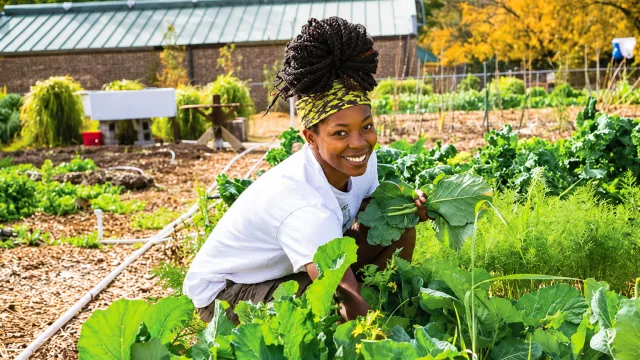
Picture: Times of Zambia
Policy Analysis with Kennedy Mupeseni
The Government should expand support under the Sustainable Agriculture Financing Facility (SAFF) to gradually reduce farmers’ reliance on the Farmer Input Support Programme (FISP).
As the country aims to transform its agriculture sector by 2030 through ambitious production, productivity and sustainability targets, increased budgetary allocation towards key infrastructure, human resource development, research and other related programmes and projects is needed.
The country’s agricultural potential should be vigorously exploited to make the sector an engine of national development, given its capacity and potential for job creation and contribution to economic growth.
This week, we narrow our discussion down to the agriculture sector by dissecting policies and programmes that are aimed at meeting key milestones in the agriculture sector to fund the country’s future economic endeavours.
The Government seems to have set the pace to position the industry for growth.
Lakatips
Advertise on Lakatips
Reach readers following the national conversation
Display, sponsored placements and briefing slots — across politics, business and sport.
Core production targets by 2030/2031 include achieving maize production to an all-time-high of 10 million tonnes up from historical averages and raising productivity from 1.7 to eight tonnes per hectare.
Wheat production is targeted at one million tonnes, soya bean production to hit three million tonnes, doubling rice output under the Coalition for African Rice Development (CARD) Phase II framework.
I am told the target to achieve high agro productivity and food security will be doubling the agricultural productivity and incomes of small-scale food producers.
In this case efforts are being made through an irrigation expansion project by bringing 500,000 hectares of land under irrigation through the Presidential Irrigation Initiative.
There is also the nutritional improvement strategy aiming at reducing national childhood stunting from 32 percent to 15 percent which would require increased budgetary allocation in 2027 and beyond.
Measures should also be taken to reduce post-harvest losses.
The Government is looking at lowering post-harvest losses to below 15 percent.
Through Zambia’s Comprehensive Agriculture Transformation Support Programme (CATSP), the nation’s second National Agriculture Investment Plan (NAIP II), a US$5.7 billion, 10-year strategic framework (2024–2033) is also aimed at making agriculture a primary driver of national growth alongside mining.
Implementation tracking by the Presidential Delivery Unit (PDU) and the Ministry of Agriculture indicates significant milestones alongside ongoing structural rollouts.
The bumper crop recorded in 2025/2026 season seems to be backed by CATSP framework interventions and a recovery from previous droughts which called for increased efforts to make the Sustainable Agriculture Financing Facility (SAFF) among programmes.
The country recorded its highest-ever maize harvest of 4,937,605 tonnes in the 2025/2026 season.
This yielded a national food surplus of over 500,000 tonnes.
It is believed that growth surged in alternative core value chains including soy, rice, and wheat, lifting agriculture’s overall real GDP contribution back above four percent.
The Government has also embarked on input and subsidy reforms such as the Farmer Input Support Programme (FISP) where over 1,024,434 small-scale farmers successfully accessed inputs via the FISP direct supply and e-voucher modalities.
But the Government should begin to expand support under SAFF so as to start weaning off farmers from FISP.
Although SAFF loans have expanded beyond crops to cover livestock, poultry, and beef, more needs to be done to double beneficiaries if this was to make agriculture more business oriented.
It is time to stop treating this important sector as the social sector by introducing value for money input support and market linkages.
We expect the Government to announce the employment of more agriculture extension officers to help small-scale farmers who have knowledge on latest agriculture techniques and market prospects of value crops.
The fisheries and livestock sectors also need extension officers to offer vital services to farmers.
The Government also needs to revamp farmers training institutes that are dotted across the country and are critical in providing knowledge and skills to farmers.
Apart from that, the agriculture research stations need more staff and equipment so that they play their role of research and development in the agriculture sector.
If needed the Food Reserve Agency (FRA) should diversify its crop purchases to include soya beans, cassava and all imaginable crops that could later be exported.
Lack of a defined market continues hampering agriculture diversification in the country, hence coming up with a mechanism of mopping up crops beyond maize and paddy rice would boost farmers’ appetite to grow more thereby achieving higher productivity.
Small-scale farmers have no capacity to access the export market but they can do so through the Government’s facilitatory role by buying major crops using export parity prices.
On the other hand, as stressed in the previous discussions, there will be more need to invest heavily in key storage infrastructure that can accommodate the expected high harvests in maize, wheat, soya beans and other crops.
The ongoing efforts to boost local fertiliser production should be encouraged to lower the cost of fertilisers which are observed to be beyond the reach of many farmers in the country.
The resuscitation of Nitrogen Chemicals of Zambia (NCZ) and established partnerships with private input manufacturers to reduce import reliance is commendable.
To achieve what we have outlined, it is important that the Government begins to allocate more money to agriculture to help realise the enormous potential that the sector holds.
Source: Times of Zambia — Read more
More to read
All Opinion →
CGIAR engages Zambian stakeholders on Demand Intelligence Portal to close agriculture scaling gap
CGIAR Centers under Scaling for Impact program

FEATURE: Partnerships propel Africa towards thriving agriculture landscape
AFRICA’s agricultural imports have been exceeding exports in the recent past, yet it has majority of the world’s arable land. The 2025
Precision agriculture is the future
ZAMBIA’S agricultural future lies beneath our feet. For decades, farmers have been expected to produce more food, feed a growing population and contribute to national economic growth, often without one of the most basic pieces of information they need. What is actually in the soil…