Business
Afreximbank commits $1bn to African automotive sector, backs regional supply chains
The African Export-Import Bank (Afreximbank) has committed US$1 billion to financing Africa’s automotive sector as it seeks to boost manufacturing, attract investment and reduce the continent’s reliance on imported vehicles. The bank said in a statement on Monday that the funding was part of its…
Picture: Zambia Monitor
The African Export-Import Bank (Afreximbank) has committed US$1 billion to financing Africa’s automotive sector as it seeks to boost manufacturing, attract investment and reduce the continent’s reliance on imported vehicles.
The bank said in a statement on Monday that the funding was part of its strategy to promote industrial development and intra-African trade, with a focus on developing regional automotive supply chains under the African Continental Free Trade Area (AfCFTA).
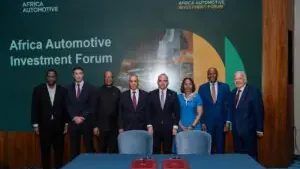
Speaking at the Africa Automotive Investment Forum in El Alamein, Egypt, Afreximbank Executive Vice President for Intra-African Trade and Export Development Kanayo Awani said the automotive industry could help accelerate Africa’s industrialisation and create skilled jobs.
“The automotive sector is a critical pillar for advancing Africa’s industrialisation,” Awani said, adding that investment in the industry could strengthen manufacturing capabilities, support economic diversification and improve the continent’s competitiveness.
The two-day forum, held on the sidelines of the Alamein Africa Forum, brought together policymakers, vehicle manufacturers and component producers to discuss investment opportunities and reforms needed to develop the industry.
Lakatips
The morning briefing
Zambia’s news, before your first meeting
One email each morning with the headlines that matter, from every newsroom we follow. Free, and one click to stop.
Afreximbank said opportunities existed in vehicle and component manufacturing, particularly through partnerships that could transfer technology and build local production capacity.
Africa’s deposits of minerals such as lithium, cobalt, manganese, nickel and copper could also support the development of automotive supply chains, including those for electric vehicles, Awani said.
The forum saw South Africa’s Malben Engineering and Egypt’s El Araby Group sign a joint venture agreement to manufacture automotive components for the Egyptian, South African and wider African markets.
The partnership combines El Araby’s industrial and engineering capabilities with Malben’s more than 50 years of experience in manufacturing and forming metal automotive components, the bank said.
African Association of Automotive Manufacturers President, Tarek Mosaad, said the agreement on AfCFTA automotive rules of origin provided a basis for developing a more integrated regional industry.
He said priorities included increasing local content, improving cross-border movement of automotive products and strengthening Africa’s role in the global mobility industry.
“Investors are not looking at 54 separate African markets. They are looking at one integrated opportunity,” Mosaad said.
AfCFTA Secretary-General, Wamkele Mene, said the continent needed investment-ready projects, competitive production locations and stronger regional supplier networks to advance its automotive strategy.
The AfCFTA Secretariat and the African Association of Automotive Manufacturers also signed a memorandum of understanding to cooperate on implementing the strategy, including customs procedures, trade facilitation, automotive standards, supplier development and investment mobilisation.
The forum also saw the establishment of an Egypt-South Africa Business Council to develop trade and investment projects in sectors including automotive manufacturing, mining, renewable energy, agriculture and transport infrastructure.
Delegates visited vehicle manufacturers Nissan Motor Corporation, General Motors Egypt and Al Mansour Automotive, as well as component producer Mobica, to examine manufacturing and supplier-development opportunities.
WARNING! All rights reserved. This material, and other digital content on this website, may not be reproduced, published, broadcast, rewritten or redistributed in whole or in part without prior express permission from ZAMBIA MONITOR.
Source: Zambia Monitor — Read more
More to read
All Business →
Luapula moves to revive fish farming
Luapula Province Permanent Secretary, Prudence Chinama-Kangwa, has called for the revitalisation of fish farming facilities and improved access to affordable fingerlings and fish feed to restore the province’s position as a leading fishing region. Kangwa said aquaculture presented an opportunity to advance the government’s Grow…

Policy institute reacts to alleged plans to dissolve ZEMA, place directors on administrative leave
The Action Institute for Policy Analysis Centre (AIPAC) has cautioned against threats to dissolve the Zambia Environmental Management Agency (ZEMA) over mining pollution, saying regulatory institutions should be empowered rather than undermined. The institute was reacting to reports attributed to Green Economy and Environment Minister…

Only 26 of 300 local patent applications come from Zambian innovators —PACRA
Zambia’s Patents and Companies Registration Agency (PACRA) has raised concerns over low patent filings by local innovators, saying only 26 of nearly 300 applications submitted between January and August this year came from Zambians. PACRA Registrar and Chief Executive Officer, Benson Mpalo, said only three…