Zambia
Betty Wilkinson: A Global Champion of Financial Inclusion and Sustainable Development
MARGARET CHISANGA Lusaka FOR more than four decades, Betty Wilkinson has dedicated her career to one central mission: helping underserved communities gain access to opportunities that improve their lives. From rural villages in Africa and Asia to ministerial offices and international development institutions, Ms. Wilkinson…
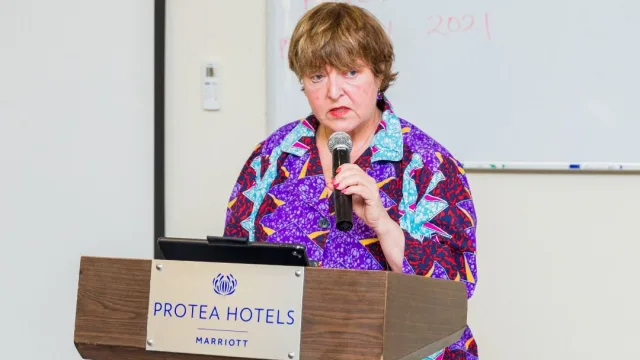
Picture: Zambia Daily Mail
MARGARET CHISANGA
Lusaka
FOR more than four decades, Betty Wilkinson has dedicated her career to one central mission: helping underserved communities gain access to opportunities that improve their lives. From rural villages in Africa and Asia to ministerial offices and international development institutions, Ms. Wilkinson has become widely recognized as a leading voice in financial inclusion and sector development, poverty reduction, gender equality, and sustainable economic growth.
Currently serving as an advisor and Board Chair/member to governments and NGOs in financial inclusion and financial literacy in Africa, Ms. Wilkinson focuses her efforts to expand access to financial services across her home, Zambia. Her career, however, stretches far beyond Zambia, encompassing leadership roles in government, academia, international development organizations, and financial institutions across four continents.
With more than 35 years of field experience, Betty has built a reputation as an innovative manager and policy expert capable of bringing together governments, regulators, businesses, donors, and communities to solve complex development challenges. Her work has influenced financial sector reforms, social protection and gender programs, agricultural development initiatives, digital finance systems, and public policy frameworks in dozens of countries.
“Financial inclusion is not simply about banking,” Wilkinson has often emphasized through her work. “It is about creating real, locally owned, sustainable opportunities for people, especially those historically excluded from economic systems and understanding.”
Early Years: Building Financial Inclusion in Africa and Asia
In her early years Ms. Wilkinson was a Peace Corps volunteer, working as a credit union field inspector in Cameroonian villages and towns. Later, she spent five years working in Bangladesh in rural and urban areas as a consultant and advisor on financial inclusion, being very fortunate to engage with financial inclusion heroes Dr. Mohammed Yunus at the Grameen Bank and Dr. Abed at BRAC and learning Bengali.
She then became a government official in Papua New Guinea, rising to be First Assistant Secretary in the Ministry of Finance and Planning. She developed and took the National Budget to Parliament for two years, nudged both agricultural and financial sector evolution, and was involved in the initial peacemaking discussions of the Bougainville crisis and other mining negotiations.
Ms. Wilkinson then worked with the Center for Institutional Reform and the Informal Sector (IRIS) at the University of Maryland. Her assignments included major projects in Nepal, Zambia, South Africa, and several transitional economies, where she advised policymakers on financial inclusion and financial regulation, privatization, enterprise development, and governance reforms.
Before moving back to Zambia, Wilkinson spent more than a decade with the Asian Development Bank (ADB), where she held several leadership positions. She ultimately served as Director responsible for finance, public management, trade, social protection, education, and health programs across Central and West Asia. In this role, she managed multinational teams and oversaw development initiatives worth billions of dollars, as well as working on drafting the ADB Financial Inclusion Strategy.
Ms. Wilkinson became an internationally recognized speaker on digital finance, financial infrastructure, green finance, gender equality, and public-sector reform. Her contributions earned significant recognition. In 2015, she was identified as one of ADB’s top managers for innovation and effective team leadership. She also received awards for championing diversity, inclusion, and organizational innovation, including recognition in China for teamwork introducing the concept of microcredit companies.
A Deep Engagement in Zambia
Ms. Wilkinson’s work in Zambia began with SME development in Village Development Services in 1992, moving to USAID project support for the privatization programme in 1993-1995. She returned to Zambia to work on microfinance regulation in the Bank of Zambia from 2001-2003. Betty came back to Zambia in 2016 as inaugural CEO of Financial Sector Deepening Zambia. She became a resident and since has worked in both private and public spheres on financial sector development, gender, and environmental concerns, including on the Board of WWF and FINCA Zambia.
Since establishing FSD Zambia in 2016, Ms. Wilkinson enabled the growth of the organization into one of the country’s most influential financial sector development institutions. Under her leadership and subsequently the full localization of FSD Zambia, the organization under Lillian Chilongo-Kangwa has become a trusted partner of the government, the Bank of Zambia, regulators, private-sector firms, development agencies, and traditional leaders.
One of the most notable achievements of FSD Zambia has been working with the traditional chiefs in Luapula Province to open up savings groups and provide essential related information on financial services and products, with UK funding. After four years 72,000 savings groups members, largely women, were saving over 1 million kwacha a year. The chiefs advised FSD Zambia that they were now ready to manage further growth themselves, demonstrating real sustainability. In addition randomized control trials show that entry into savings groups is a strong entry point in enabling improved financial inclusion nationally. This model was assessed and documented as very successful, and now the Government is being encouraged to go national with this approach.
The FSD Zambia team, with other agencies, introduced and expanded weather-based crop microinsurance to more than one million smallholder farmers. The initiative provides protection against climate-related risks and helps farmers maintain their livelihoods when faced with droughts, floods, or other weather-related shocks. In addition, work on mobile money development, digital payment systems, financial education programs, and the digitization of agricultural subsidies and school fee payments has been crucial.
Recognizing that financial literacy is critical for long-term economic participation, FSD Zambia worked with national stakeholders to help incorporate financial education into the school curriculum from Grades 1 through 12. The initiative aims to equip future generations with practical financial skills from an early age. A key radio programme delivered in seven languages, Bank Yako Yako helped deepen financial education.
During the COVID-19 pandemic, Wilkinson and her team conducted extensive research and support to address the crisis’s impact on women, rural households, smallholder farmers, and microenterprises. The findings helped policymakers and development partners better understand the vulnerabilities faced by disadvantaged groups during the economic downturn.
Leadership Across Africa and Beyond
In addition to her work in Zambia, Wilkinson served as the inaugural Chair of the Financial Sector Deepening Network, a partnership of nine financial sector development organizations operating throughout Africa. The network works to strengthen inclusive financial systems that contribute to the United Nations Sustainable Development Goals. She also worked for the African Development Bank as a consultant on financial inclusion growth and training. Currently she is Board Chair of FSD Somalia and a member of the Transition Assistance Practice Group in IFIT, a global peace and negotiations organization based in Barcelona.
Her ability to unite diverse stakeholders around common objectives has become one of her defining strengths. Colleagues often describe her leadership style as collaborative, inclusive, and results-oriented.
Championing Women and Inclusive Growth
Throughout her career, Wilkinson has remained a strong advocate for gender equality and women’s economic empowerment.
Many of her initiatives have focused specifically on improving access to finance for women entrepreneurs, reducing barriers to participation in the economy, and strengthening women’s roles in decision-making processes. She has consistently promoted approaches that integrate gender considerations into policy design, financial services, agricultural programs, and social protection systems.
Her work has also emphasized support for youth employment, vulnerable populations, rural communities, and individuals living in poverty.
By combining policy reform with practical field implementation, Wilkinson has demonstrated that inclusive growth can produce meaningful results when communities are actively involved in shaping locally owned, sustainable development solutions.
Recognition and Legacy
Wilkinson’s accomplishments have earned numerous awards and professional distinctions over the years. Among them are the Bank of Zambia Governor’s Award, Asian Development Bank Innovation Awards, recognition for exceptional performance and diversity leadership, and appointments to international advisory groups focused on poverty reduction and financial inclusion.
Educated in agricultural economics and business economics, Wilkinson combines strong technical expertise with extensive international experience. She has worked in more than 30 countries across Africa, Asia, the Pacific, Eurasia, North America, and the Middle East.
Today, Betty Wilkinson is widely regarded as one of the development sector’s most experienced and respected leaders. Her career illustrates how effective leadership, innovation, and collaboration can help transform financial systems and improve the lives of millions of people.
As governments and institutions worldwide continue seeking solutions to poverty, inequality, and economic exclusion, Wilkinson’s work stands as a compelling example of how inclusive development can create lasting social and economic impact.
Source: Zambia Daily Mail — Read more
More to read
All Zambia →
Zambian govt vows to protect people with albinism
Government will not tolerate any form of violence, abduction, trafficking, mutilation or killing of persons with albinism, Northern Province Permanent Secretary, Beauty Undi-Phiri has warned. Undi-Phiri said beliefs that body parts of persons with albinism could bring wealth, power or good fortune were false, inhumane…
Lewanika backs Botswana’s Khama, says sovereignty must not shield govts from accountability
Council of Elders for Ethical Leadership, Democracy and Development (CEELDD) Chairperson Prince, Akashambatwa Mbikusita–Lewanika, has backed former Botswana President, Seretse Khama Ian Khama’s concerns over democracy and human rights in Zambia, saying national sovereignty should not be used to shield governments from accountability. Lewanika said…
Why Zambia is attending Commonwealth Heads of Government Meeting
Zambia will participate in the 2026 Commonwealth Heads of Government Meeting (CHOGM) to demonstrate its commitment to multilateral cooperation, economic diplomacy and the promotion of peace, security and democracy, the Ministry of Foreign Affairs and International Cooperation has said. Minister of Foreign Affairs and International…