Business
FQM Kansanshi’s $1.2bn expansion project exceeds design throughput in first year
One year after commissioning, Kansanshi Mining PLC’s
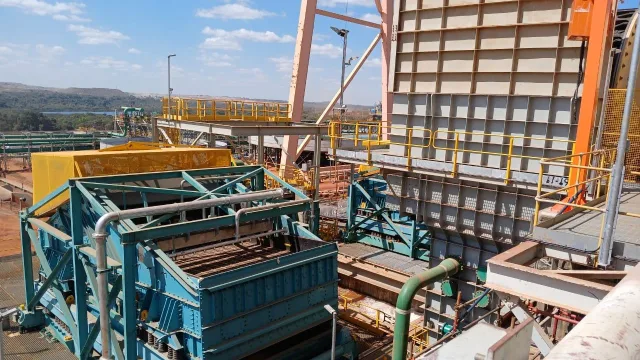
Picture: Zambian Business Times
One year after commissioning, Kansanshi Mining PLC’s S3 Expansion is performing above design expectations, with the new plant on track to process approximately 27 million tonnes of ore in 2026 – exceeding its design throughput of 25 million tonnes per annum.
According to Kansanshi Mining PLC, Manager, Corporate Affairs, Ryan Ellis, the performance represents a strong first year for the US$1.2 billion expansion, which has significantly increased Kansanshi’s sulphide processing capacity and strengthened the mine’s long-term copper production outlook.
He said the S3 was officially commissioned in August 2025 and achieved commercial production on 31 December 2025. Since then, the plant has steadily increased throughput, supported by strong availability, utilisation and milling performance.
Ellis noted that throughput remained above design capacity during the second quarter of 2026, with May recording the highest monthly processed tonnage since commissioning.
He explained that the increased capacity has enabled Kansanshi to process substantial quantities of lower-grade sulphide ore, including material held in long-term stockpiles. This gives the operation greater flexibility in managing its ore resources and allows Kansanshi to recover value from material that was previously more difficult to process economically.
Lakatips
Advertise on Lakatips
Reach readers following the national conversation
Display, sponsored placements and briefing slots — across politics, business and sport.
“At the centre of the expansion is a new 25-million-tonne-per-annum sulphide processing line, substantially increasing Kansanshi’s total processing capacity and supporting the mine’s transition towards larger-scale mining.”
“Metallurgical performance continues to improve as the operation optimises the plant and gains further experience with different ore blends. Copper concentrate produced by S3 has also been successfully integrated with Kansanshi’s main concentrate stream and meets the required smelter quality specifications.”
He added that the combination of high throughput and the ability to economically process lower-grade ore is strategically important for Kansanshi.
“It allows the mine to access a broader range of sulphide resources and supports the development of future mining areas, including the South East Dome. Publicly shared life-of-mine plans indicate that the expanded operation is expected to support Kansanshi into the 2040s and beyond.”
Ellis added that in Zambia’s national context, S3’s successful ramp-up comes at a time when the country is seeking to substantially increase national copper production. “By adding processing capacity and enabling more of Kansanshi’s mineral resource to be economically recovered, S3 increases the productive capacity of Zambia’s mining industry and demonstrates First Quantum Minerals’ continued long-term investment in the country.”
He said the project has also created significant economic opportunities for Zambians.
Meanwhile, Ellis noted that during construction, the S3 workforce peaked at approximately 2,500 people. Following commissioning, around 750 additional operational positions were created to support expanded mining and processing activities.
“Zambian suppliers, contractors and service providers have also benefited from increased demand for goods and services associated with the expanded operation, while higher levels of mining activity contribute to government revenues and wider economic activity in North-Western Province and across Zambia.”
“S3 forms part of a wider modernisation of Kansanshi, including investment in the smelter, tailings infrastructure, mining fleet, processing equipment and integrated operating systems.”
He said the first year of operation has also provided valuable experience in optimising the plant for a wider range of ore types. Processing long-term stockpiled material presents different metallurgical characteristics from fresh ore, requiring close coordination between mining, maintenance, processing and metallurgy teams.
He concluded by adding that continuous optimisation of operating practices has helped the plant progressively improve performance, while sustained throughput above design capacity during 2026 demonstrates the progress achieved during ramp-up.
Source: Zambian Business Times — Read more
More to read
All Business →
45 illegal vehicles not under Ministry of Mines were illegally getting fuel from ministry’s fuel reserves in 2025 – Audit Reveals
According to the Report of the Auditor
Mnangagwa tasks COMESA on intra-regional trade ahead of 25th summit
Zimbabwean President Emmerson Mnangagwa has challenged the Common Market for Eastern and Southern Africa (COMESA) to identify practical measures to increase regional production, processing and intra-regional trade as the bloc prepares for its 25th Heads of State and Government Summit. Mnangagwa also emphasised the need…
What should happen when a law made for Zambians begins to injure its own citizens?
While foreign-owned mining companies often thrive and