Business
Kitwe twins pack their gowns for shoe making
BORN identical in body but carrying different dreams, Kitwe-based twins Esau and Jacob Valende have walked the same path from a humble childhood in Kamatipa
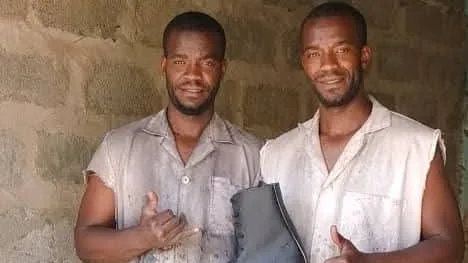
Picture: Kalemba
BORN identical in body but carrying different dreams, Kitwe-based twins Esau and Jacob Valende have walked the same path from a humble childhood in Kamatipa compound to donning graduation gowns, only to trade them for hammers, stitches and leather at a small workshop in Ndola’s Masala Market.
The 33-year-old twins were once hopeful graduates.
Esau studied Physiotherapy at Lusaka Apex Medical University while Jacob trained as a teacher at Nkana College of Education.
Like thousands of Zambian graduates, they spent years chasing government recruitment lists that never carried their names.
Both of them were among thousands of applicants who applied for jobs when the government was recruiting 30,000 teachers and 11,000 health workers.
Lakatips
Advertise on Lakatips
Reach readers following the national conversation
Display, sponsored placements and briefing slots — across politics, business and sport.
However, their names were never on the selected list.
But instead of allowing rejection to swallow them, the Valende twins turned to shoemaking, a skill society mostly overlooks.
“We thought being left out during the recruitment would crush us, but we quickly realised that we have got this God-given talent,” the twins shared.
“Shoemaking has given us a second chance, it has given us dignity.”
The craft began modestly in 2021 when they started experimenting with belts, wallets and slippers in Kitwe’s Kawama township.
Jacob later joined in and together they sharpened their hands on leather, moving into full-scale shoe production from their Masala workshop where they craft safety boots, sandals, school shoes among others.
The twins explained to #Kalemba in an interview that what others see as a small business carries enormous potential.
“In the chain of production of shoes, there is need for human resources, from the workshop to the outlet. If supported, this industry can create jobs for many fellow youths,” they said.
The brothers admit the road has not been smooth as access to quality materials, costly machines and lack of startup capital have slowed their growth.
Furthermore, most of the raw materials they use are imported from abroad at high cost.
They revealed that despite applying for Constituency Development Fund (CDF) support on three occasions, their applications have not been successful.
They have since appealed to the government and other stakeholders to support their craft, which they believe can contribute to youth empowerment and job creation.
Source: Kalemba — Read more
More to read
All Business →
Y Celeb ft. Vocalist Zm – Dobo Video
Copperbelt rap heavyweight Y Celeb has released a new music video for his latest song, “Dobo,” a record that challenges the stereotypes society often attaches to people who smoke marijuana. The song questions the assumption that marijuana users cannot achieve success, highlighting how quick judgements…
Catholic priest Tyola, UPND’s Bwalya, reportedly reconcile
Catholic priest Father (Fr) Henry Tyola and United Party for National Development (UPND) official Frank Bwalya have reportedly reconciled following a dispute over alleged defamation and cyber-related abuse. Last week, Zambia Monitor reported that Bwalya, had threatened legal action against Fr Tyola over the alleged…

Zambia claims unemployment rate falls to 9.9%, as Western Province worst hit at 20.6%
Zambia’s unemployment rate fell to 9.9 percent in 2025 from 12.9 percent in 2024, while the employment-to-population ratio increased to 37.1 percent, according to the latest labour market survey. The findings were released during the official dissemination of the 2025 Labour Force Survey and Employment…