Politics
Let the Law Speak: Why Brian Mundubile Must be Allowed to Submit His Election Petition before the Deadline.
Zambia stands at a delicate democratic crossroads. Following the 13 August 2026 presidential election, Brian Mundubile has indicated that he intends to challenge the declared result through the courts. Whatever one thinks of his allegations or political
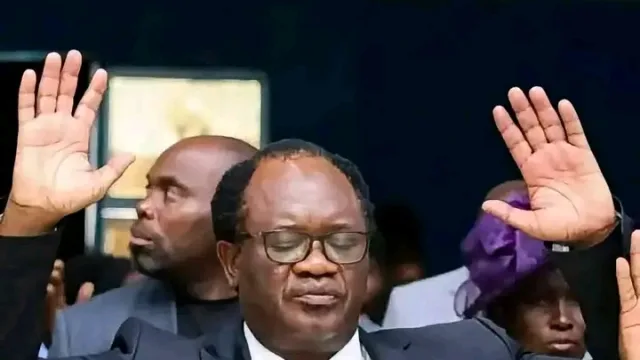
Picture: Zambian Observer
LET THE LAW SPEAK: WHY BRIAN MUNDUBILE MUST BE ALLOWED TO SUBMIT HIS ELECTION PETITION BEFORE THE DEADLINE.
Zambia stands at a delicate democratic crossroads. Following the 13 August 2026 presidential election, Brian Mundubile has indicated that he intends to challenge the declared result through the courts. Whatever one thinks of his allegations or political standing, allowing him to pursue that challenge is not a threat to democracy; it is democracy functioning as designed.
An election petition is precisely the constitutional mechanism through which an aggrieved candidate can ask an impartial court to test whether an election was conducted in accordance with the law. Zambia’s constitutional framework expressly recognises election petitions, while the rules governing a presidential challenge provide a tightly defined judicial process and timeframe.
The fundamental question, therefore, should not be whether Mundubile should be permitted to complain, but whether the courts should be allowed to determine the complaint on its merits.
That distinction matters enormously.
If the petition is without merit, the court can dismiss it. If the evidence does not establish the alleged irregularities, the result can emerge from the process with greater legitimacy. But if a candidate is prevented, intimidated or practically incapacitated from placing his evidence before the appropriate court, suspicion will inevitably replace adjudication. A disputed election settled by force, fear or administrative pressure leaves wounds that a judicial decision might have healed.
Zambia cannot afford that.
The country has historically taken pride in peaceful transfers of power and competitive multiparty politics. Yet the present post-election atmosphere has already generated serious concern: vote counting was temporarily suspended following reports of violence and stolen ballot papers, and 11 opposition-linked individuals were arrested during a security operation in which gunfire was exchanged and a former minister, Mutotwe Kafwaya, was killed. International concern has also been expressed about due process and the treatment of opposition figures.
Lakatips
For Zambian newsrooms
Your reporting, credited and linked back
Join the newsrooms whose work reaches readers through Lakatips — your name on every story, and a route straight back to you.
These circumstances make restraint more important, not less.
The ruling party has little to lose by easing the pressure and allowing the legal process to run its course. It has much to lose by appearing to fear that process. A government confident in the legitimacy of its victory should be willing to say: Take the evidence to court; let the law decide.
That approach would not amount to surrendering governmental authority. On the contrary, it would demonstrate constitutional confidence and political maturity.
The consequences of allowing the present tension to persist are potentially profound. Economically, uncertainty can discourage investment, disrupt business confidence and complicate Zambia’s efforts to consolidate the economic gains made since the country’s debt crisis. Zambia’s recovery, its currency stability and its ambitions in the copper sector all depend partly upon confidence in institutions and political stability.
Socially, prolonged confrontation risks deepening political divisions among families, communities and supporters of rival parties. People who already struggle with the cost of living have little appetite for another period of instability. Every arrest, raid, confrontation or inflammatory statement adds another layer of fear to an already tense national mood.
And politically, perhaps the greatest danger is the erosion of faith in constitutional methods. When citizens begin to believe that elections are decided only at polling stations—or that the courts cannot be trusted to hear legitimate grievances—they may eventually conclude that peaceful political participation is pointless. That is the moment when democracy becomes most vulnerable.
The answer is therefore neither political retaliation nor street confrontation. It is de-escalation and law.
Mundubile should be allowed every lawful opportunity to lodge his petition, present his evidence and have the matter determined by the competent court. At the same time, opposition leaders must commit themselves to peaceful conduct and respect whatever judgment the courts ultimately deliver.
This is bigger than Brian Mundubile. It is bigger than President Hichilema. It is about whether Zambia can demonstrate, at a moment of extraordinary pressure, that our institutions are stronger than our political passions.
The ruling party has an opportunity to make a statesmanlike gesture: ease the pressure, protect the space for lawful political activity, and allow the petition to be heard without intimidation. If the election was genuinely won fairly, an open judicial process can only strengthen that victory.
Because sometimes the strongest government is not the one that silences its challenger.
It is the one confident enough to let its challenger speak—and confident enough to let the law answer him.
Zambia needs that confidence now.
Tobias T. Banda
Former Independent Parliamentary Candidate for Roma Constituency
The author is a distinguished Community Leader, Governance activist and Development advocate with extensive experience in Public Administration, Government Liaison, Community Mobilization and Youth Leadership.
Source: Zambian Observer — Read more
More to read
All Politics →No Presidential Petition Before the Constitutional Court
The Judiciary says there is NO Presidential petition before the Constitutional Court....

‘Restore access to courts,’ Zambian lawyers knock govt over closure of courts amid post-election battles
The Law Association of Zambia has called for the immediate restoration of access to courts following the closure of superior courts in Lusaka and the deployment of heavily armed military personnel around court premises. LAZ president, Arnold Kaluba, expressed concern over the shutdown, which occurred…

Solwezi court refers Mundubile, Zulu sedition case to High Court
Principal Resident Magistrate, Mambwe Mukonde, has referred the two-count sedition case involving former 2026 NRPUP presidential candidate Brian Mundubile and his running mate, Makebi Zulu, to the High Court after ruling that the Solwezi Magistrates’ Court lacked jurisdiction to hear the matter. Citing provisions of…