Agriculture
Maize means money: Why 10m tonnes will feed, fund and employ Zambia
From food security to industrialisation – President HH’s Grow Zambia harvest begins What is Grow Zambia? UNVEILED by President Hakainde Hichilema at his second-term inauguration on September 1, 2026, Grow Zambia represents eight production targets for 2031, popularly captured as 10·10·5·3·3·1·1·1: 10 million tonnes of…
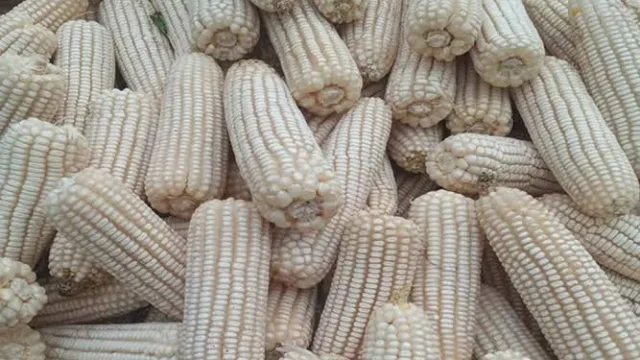
Picture: Zambia Daily Mail
- From food security to industrialisation – President HH’s Grow Zambia harvest begins
What is Grow Zambia?
UNVEILED by President Hakainde Hichilema at his second-term inauguration on September 1, 2026, Grow Zambia represents eight production targets for 2031, popularly captured as 10·10·5·3·3·1·1·1:
10 million tonnes of maize annually, 10,000MW generation capacity, 5 million tourist arrivals, 3 million tonnes of copper, 3 million tonnes of soya beans, 1 million tonnes of wheat, a US$1 billion beef industry, and 1 million tonnes of sugar.
It is the machinery, not the motto— and Parliament’s vote to approve 30 realigned ministries on October 27 is the machinery room. For too long, we have talked about agriculture as poverty management. The President is talking about it as wealth creation.
“Zambia will become a producer rather than a consumer of goods,” President Hichilema declared in his Inaugural Address on September 1, 2026.
Lakatips
For Zambian newsrooms
Your reporting, credited and linked back
Join the newsrooms whose work reaches readers through Lakatips — your name on every story, and a route straight back to you.
The centrality of maize
The centre of that shift is maize. The first number in 10·10·5·3·3·1·1·1 is 10 million tonnes of maize a year. Today we produce between 3 and 4 million in a good year-though the President recently announced that the last farming season saw production increase to a record 5.1 million metric tonnes, a remarkable achievement by our hard-working farmers.
Ten million is not a vanity target; it is food security locked in, dollar earnings scaled up, and jobs created in every district. First, food security.
With a population that was 13.1 million in 2010, 19.6 million in 2022 and now past 20 million-growing at 3.4 percent a year, adding 700,000 Zambians every year- we cannot feed the future with the same field. At 10 million tonnes, Zambia holds a strategic reserve of over 3 million tonnes after feeding every citizen, every school under Free Education, and every poultry and livestock feedlot.
The 2024 drought taught us what happens when the grain is short: prices spike, the poorest pay, and Government spends scarce forex on emergency imports. Ten million means we never queue for mealie meal again. Second, dollars and downstream industries This is where President Hichilema’s initiative changes the game. The President has been clear: “We will grow it, process it, and sell it.”
Under the new Ministry of Trade and Exports, maize is not just a Food Reserve Agency crop, it is an export commodity under AfCFTA, SADC and COMESA. Eastern Africa is short. Kenya, Rwanda, South Sudan and the DRC import over 2 million tonnes of white maize a year, often from Mexico and Ukraine at US$400 a tonne landed, while we can deliver at US$260 US$280 from Chipata and Nakonde.
At 10 million tonnes, even after retaining 6 million for domestic use, seed and strategic reserve, Zambia can export 3-4 million tonnes. At US$280/tonne, that is US$840 million to US$1.12 billion a year—more than our traditional non-traditional exports combined.
That is not aid. That is grown forex, grown in Eastern Province, grown in Mkushi, grown in Mpongwe. But the real prize lies beyond the export of raw grain. Every tonne of maize that leaves Zambia unprocessed represents lost opportunities for value addition, lost jobs, and lost industrial capacity.
The Grow Zambia Agenda envisions maize as the foundation of a manufacturing revolution—one that transforms yellow and white kernels into a diverse array of products that command premium prices in regional and global markets. https://enews.daily-mail.co.zm/welcome/home
Source: Zambia Daily Mail — Read more
More to read
All Agriculture →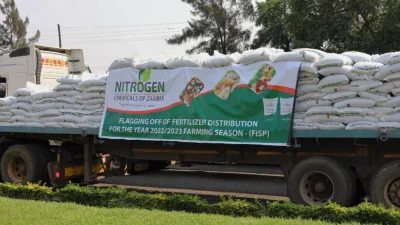
Govt officials create ghost farmers to steal FISP – Expert
The Farmer Input Support Program (FISP) is

Diesel & Electric-Powered Trucks Unveiled
Pilatus introduces six SANY truck models to the Zambian market, targeting mining, construction, agriculture and...
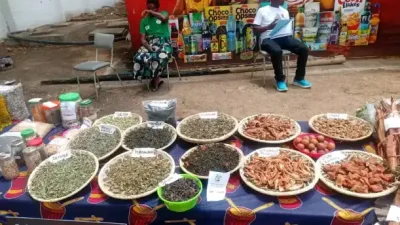
Zambia is losing seeds our grandparents survived on – Caritas
Caritas Zambia has warned that the country