Zambia
One Zambia, One Nation Must Live On
Edina Kamanga says the legacy of a united Zambia must live on, calling on citizens...
Picture: Zambia24
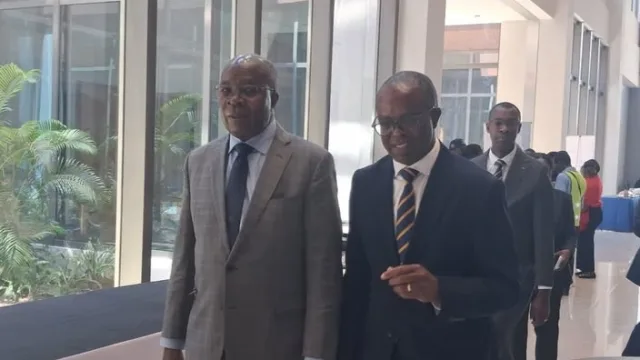
Edina Kamanga says the legacy of a united Zambia must live on, calling on citizens across political, social and generational lines to protect the spirit of “One Zambia, One Nation” and uphold the unity, peace and love for country entrusted to the young by the nation’s freedom generation.
By Francis Maingaila ♥️
Lusaka, Zambia24 — 17-09-2026 — Kamanga’s widow, Edina Kamanga, has called on Zambians to preserve the spirit of unity, peace and patriotism that characterised the struggle for independence, saying the country has only one home and citizens must never allow divisions to destroy it.
Mrs Kamanga was speaking on the sidelines of the 30th Memorial Anniversary of Reuben Chitandika Kamanga, Zambia’s First Vice-President, freedom fighter and statesman.
Her message was a reflection on the values that brought together the generation that fought for independence and the responsibility of the present generation to protect what was built by those who came before them.
Lakatips
Advertise on Lakatips
Reach readers following the national conversation
Display, sponsored placements and briefing slots — across politics, business and sport.
Mrs Kamanga said the struggle for independence demanded trust, discipline and sacrifice because those involved understood that sensitive information could have serious consequences if it fell into the wrong hands.
She recalled how she carefully kept information shared with her by her late husband because of the sensitive nature of the struggle.
“Whatever he came and whispered to me, I kept to my chest because those were very delicate days,” Mrs Kamanga said.
She explained that people involved in the struggle could not afford to discuss sensitive matters carelessly because there was always a possibility that some individuals had been sent by enemies to gather information or disrupt their activities.
This, she said, meant that freedom fighters and their families had to remain cautious while staying committed to the larger cause of liberating Zambia.
Mrs Kamanga said the struggle nevertheless brought together people from different backgrounds who were prepared to work towards a common national objective.
She said that experience demonstrated the strength that comes when citizens put their common interests ahead of individual differences.
According to Mrs Kamanga, that spirit of togetherness is one of the important lessons that should not be lost as Zambia moves from one generation to another.
She particularly reflected on the meaning of the “One Zambia, One Nation” philosophy associated with Zambia’s founding President, Kenneth Kaunda.
Mrs Kamanga said the phrase carried a much deeper meaning for her generation than simply being a national slogan.
“I know these days the youth just see it, but with us, when we say it, when we speak it, it comes from the bottom of our hearts because we know what that means,” she said.
She said the philosophy represented an understanding that Zambians belonged to one national family and had a responsibility towards one another.
Mrs Kamanga said the word “comrade” was also significant because it represented solidarity, friendship and a shared commitment to the national cause.
“Everybody was a comrade. And that word, comrade, goes a long way. We were one big family,” she said.
She said the sense of belonging was particularly important during the struggle because the people involved were prepared to make personal sacrifices for a future they believed would benefit generations they might never meet.
Mrs Kamanga expressed concern that some young people today may not fully appreciate the sacrifices made by the country’s founding generation.
She said the passage of time should not result in young Zambians becoming disconnected from the country’s history or taking peace and national unity for granted.
Mrs Kamanga called for deliberate efforts to teach young people about Zambia’s history, saying citizens need to understand where the country came from in order to appreciate the importance of protecting what previous generations fought to establish.
She said patriotism should not simply be expressed through words but should be reflected in how citizens treat their country and fellow citizens.
Mrs Kamanga also recalled how Zambia was viewed during her travels outside the country, saying people often associated Zambia with President Kaunda and its reputation as a peaceful nation.
“Wherever I went they would say, ‘Where are you coming from?’ And I said, ‘I’m from Zambia,’ and they would say, ‘Zambia, KK,’” she recalled.
She said the association between Zambia and peace was something her generation valued deeply and wanted to see preserved.
Mrs Kamanga said the country had earned a reputation for peaceful coexistence and urged citizens not to allow disagreements and differences to destroy that heritage.
“We want to continue that peace and love for one another. We are praying that it continues,” she said.
She warned against forces that could create unnecessary divisions among Zambians, urging citizens to recognise that, despite their differences, they share one country and one national home.
“We should not allow the devil to command separators,” Mrs Kamanga said.
Her appeal was also a reminder that national unity requires an active commitment from every generation.
She said Zambia should remain a country where citizens can live together peacefully, support one another and place the interests of the nation above divisions.
Mrs Kamanga said the responsibility of protecting Zambia’s peace and unity could not be left to politicians, leaders or institutions alone because every citizen had a role to play.
She said the generation that fought for independence had its own challenges and sacrifices, while the present generation faced different challenges, but the common responsibility remained the preservation of Zambia as one nation.
Mrs Kamanga said the country should therefore remain a place where all citizens feel that they belong.
“We have only one Zambia to run to. This is our home, home,” she said.
Her message came as the nation reflected on the life and legacy of Reuben Chitandika Kamanga, whose contribution to the struggle for independence and the early development of Zambia remains part of the country’s political history.
For Mrs Kamanga, remembering such figures should go beyond commemorating their names and dates of death.
She said remembrance should also encourage Zambians to reflect on the values, sacrifices and national ideals for which the freedom generation stood.
The 30th Memorial Anniversary therefore provided an opportunity not only to remember a statesman, but also to revisit the principles of unity, patriotism and peaceful coexistence that Mrs Kamanga believes Zambia must continue to pass from one generation to the next.
Reformed Church of Zambia cleric Rev. Prof. Devison Tilen Banda has challenged Zambians to go beyond celebrating the legacies of national heroes and instead live lives of service, peace and sacrifice that will leave a lasting mark on future generations.
Speaking during the 30th Memorial Anniversary of Zambia’s First Vice-President, Reuben Chitandika Kamanga, Rev. Banda said the occasion should remind Zambians that a person’s worth is not measured simply by the years they live, but by the contribution they make to their family, community and country.
He said death should not be viewed as the end of a person’s existence, particularly for those who die in Christ, but as a “sleep” awaiting resurrection.
Rev. Banda said the Christian understanding of death should give mourners hope and prevent them from grieving as people who have no hope.
Drawing from Paul’s First Letter to the Thessalonians, Rev. Banda said believers should not remain ignorant about those who have died because Christians believe that Jesus died, rose again and will return with those who have fallen asleep in Him.
He said the Scriptures teach that the Lord Himself will descend from heaven with a loud command, the voice of an archangel and the trumpet call of God, after which the dead in Christ will rise.
Rev. Banda said death remains one of the most difficult experiences for human beings because it raises questions about why a particular person has died and why death has occurred at a particular time.
“Why this time? And why not the other time?” he asked, noting that some people feel their loved ones have died too soon, while others question why people who have lived long lives must still leave them.
He, however, said such questions should also encourage people to appreciate the gift of life and the contribution made by those who have lived among them.
Rev. Banda said when a person has had the opportunity to grow, marry, have children and participate in community life, there is reason for the family and society to thank God for that life.
He said the death of a loved one should therefore provide an opportunity not only to mourn but also to reflect on the life and legacy of the deceased.
Rev. Banda said a person’s legacy could remain alive for decades after death if that individual positively affected family members, friends and society.
He cited Mr Kamanga as an example of a national figure whose contribution to Zambia’s liberation struggle and early nation-building continues to be remembered.
He described Mr Kamanga as a foremost Zambian freedom fighter, Pan-Africanist thinker and the nation’s inaugural Vice-President, serving from 1964 to 1967.
Rev. Banda said the lesson from Mr Kamanga’s life was that people should seek to serve something greater than themselves.
He said the same principle should apply at family and community level, where individuals should strive to leave behind values and memories that future generations can appreciate.
“Thirty years after we are here, what would be the case for you? How will people remember you?” Rev. Banda asked.
He challenged Christians to examine the kind of legacy they were creating while still alive, saying their conduct towards God, family and neighbours would determine how they would be remembered.
Rev. Banda said people should strive to become peacemakers and contributors to society rather than individuals whose actions cause division and conflict.
He said the Christian call to love God and one’s neighbour should therefore be reflected in practical service to others.
The cleric further reminded mourners that Christian hope extends beyond the grave, pointing to the biblical promise of a new heaven and a new earth where there will be no more death, mourning, crying or pain.
He said Christians look forward to the day when they will join in the eternal presence of God and worship Him.
Rev. Banda concluded by urging mourners to allow the memorial gathering to become a moment of personal reflection and transformation.
He said people should seek to be remembered “not as freedom takers, but as freedom contributors” and “not as peace disruptors, but as peacemakers.”
“Death is not the last statement. It is a sleep,” he said, stressing that those who die in Christ have the hope of awakening to eternal life with Jesus Christ.
Source: Zambia24 — Read more
More to read
All Zambia →Zambia Railways MD MALINDI Leaves By Mutual Consent
Zambia Railways Limited and its Managing Director, CUTHBERT MALINDI, have mutually agreed...
Chitimukulu warns social media abusers
CHOMBA MUSIKA Lusaka THE Chitimukulu, Kanyanta Manga II of the Bemba, says Zambians, especially the youth, who are fond of verbally abusing the elderly and leaders on social media risk being cursed. The 82-year-old traditional leader, himself a victim of verbal abuse, is dismayed by…

Chitimukulu Condemns Abusive Language on Social Media
His Royal Highness Paramount Chief Chitimukulu Kanyanta Manga II, Mwine Lubemba, has expressed concern over...