Business
Paliwal calls for closer integration of mobile money, banking to boost SME lending
Zambia needs stronger integration between mobile money services and the formal banking system to improve small and medium-sized enterprises’ (SMEs) access to credit, First Alliance Bank Managing Director, Kuldip Paliwal said. Paliwal said many businesses relied exclusively on mobile money, limiting banks’ ability to assess…
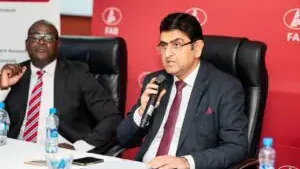
Picture: Zambia Monitor
Zambia needs stronger integration between mobile money services and the formal banking system to improve small and medium-sized enterprises’ (SMEs) access to credit, First Alliance Bank Managing Director, Kuldip Paliwal said.
Paliwal said many businesses relied exclusively on mobile money, limiting banks’ ability to assess their financial performance and determine their creditworthiness.
He said businesses needed to channel more transactions through bank accounts to establish verifiable financial records that could support loan applications.
“While mobile money will be complementing businesses, they also need to come to the banking channel as well, so that the bank can review their transaction profile and turnover and they can get more finance,” Paliwal said.
Speaking in Lusaka at the launch of new bank accounts, Paliwal said SMEs played a central role in Zambia’s economic development, contributing significantly to employment and economic output.
Lakatips
For Zambian newsrooms
Your reporting, credited and linked back
Join the newsrooms whose work reaches readers through Lakatips — your name on every story, and a route straight back to you.
He said expanding access to financial services beyond traditional urban centres remained important, citing figures indicating that more than 75% of registered businesses were concentrated in two provinces, while the remaining eight accounted for 25%.
Paliwal said mobile money had expanded financial inclusion over the past decade, with integration between mobile money operators and banks allowing customers to transfer funds between mobile wallets and bank accounts.
He cited International Monetary Fund data released about a year earlier showing that financial inclusion had risen to 79%, from between 50% and 60% previously.
However, he said more than half of businesses operated without bank accounts, relying instead on mobile money, making it difficult for lenders to establish their turnover and assess their ability to repay loans.
Paliwal said improved access to financial records could help banks extend credit to businesses, including those operating in mining supply chains on the Copperbelt.
He also said Zambia’s loan-to-deposit ratio remained below 45%, meaning banks lent less than 45 Kwacha for every 100 kwacha held in deposits.
Increasing the ratio to between 50% and 55% would create room for greater lending to businesses and support economic activity, he said.
The figures on SME contributions to gross domestic product and employment, the proportion of businesses without bank accounts, and the loan-to-deposit ratio are attributed to Paliwal and have not been independently verified.
WARNING! All rights reserved. This material, and other digital content on this website, may not be reproduced, published, broadcast, rewritten or redistributed in whole or in part without prior express permission from ZAMBIA MONITOR.
Source: Zambia Monitor — Read more
More to read
All Business →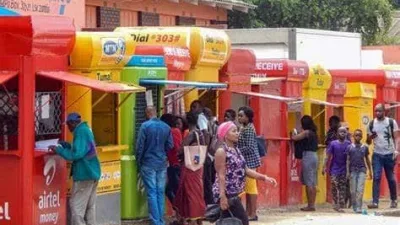
ZANAMACA protests displacement of Mobile Money Operators in Lusaka’s CBD
The ongoing removal of street vendors from

Shoppers can now pay with their mobile wallet at Zambia’s largest retailer
Customers can now pay with their preferred mobile wallet at Shoprite stores across Zambia, giving them more choice at checkout and a simple, convenient way to complete their purchases. Mobile money adoption continues to surge in Zambia as consumers increasingly move from traditional payment methods…
President Ramaphosa opens Vedanta expansion in South Africa
On 16 October 2026, in Aggeneys, a mining town in South Africa’s Northern Cape, President Cyril Ramaphosa pressed a button and inaugurated the Gamsberg Phase II mining operation. With that, one of the largest mining investments in South Africa has moved from construction into production…