Business
Zambia, Norway discuss carbon-credit deal to support stable IPP power tariffs
Zambia has started negotiations with Norway on a carbon-credit deal aimed at using proceeds from international carbon markets to buffer independent power producers (IPPs) and support stable tariffs for electricity sold to state utility ZESCO, the government said on Thursday. Minister of Green Economy and…
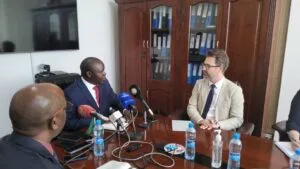
Picture: Zambia Monitor
Zambia has started negotiations with Norway on a carbon-credit deal aimed at using proceeds from international carbon markets to buffer independent power producers (IPPs) and support stable tariffs for electricity sold to state utility ZESCO, the government said on Thursday.
Minister of Green Economy and Environment, Gabriel Siame, said the proposed buffering mechanism would not require funding from the Zambian treasury but would instead draw on proceeds from private international carbon markets.
Siame was speaking during engagements on IPPs with officials from Norway’s Ministry of Climate and Environment in Lusaka.
He said the government wanted carbon credits to create opportunities for Zambian businesses to participate in and benefit from the carbon market.
“The government is prioritizing the energy space as a top national agenda, describing the ongoing carbon credit project as a true example of north-south partnership that delivers results beyond negotiations,” Siame stated.
Lakatips
Advertise on Lakatips
Reach readers following the national conversation
Display, sponsored placements and briefing slots — across politics, business and sport.
Siame said the initiative focused on strengthening capacity and engaging businesses, adding that he had been instructed by President Hakainde Hichilema to ensure carbon credits were made to work for Zambia.
He said the government needed to move quickly to address bottlenecks and conclude agreements before the end of the year so that more power could be brought onto the national grid.
“We need to move, address all bottlenecks and if possible close everything before the end of the year. The government will do its utmost to act on time and avoid creating a perception that the energy space is unattractive to investors,” Siame said.
He said due process should safeguard the integrity of the programme without causing prolonged delays, adding that establishing the framework could help pave the way for more power producers to enter the market.
Siame said the government wanted final negotiations to minimise risks for the private sector, with bilateral partners better placed to absorb some of those risks while producers focused on generating and selling electricity.
“Through the Ministry, government has developed tools and methods to actualise business in carbon credit markets to ensure Zambian businesses, including ordinary citizens, can participate and benefit,” he said.
Norwegian Ministry of Climate and Environment Senior Adviser Mads Uhlin Hansen welcomed the steps Zambia had taken to develop the carbon market and said the country was among the first to implement projects in the area.
WARNING! All rights reserved. This material, and other digital content on this website, may not be reproduced, published, broadcast, rewritten or redistributed in whole or in part without prior express permission from ZAMBIA MONITOR.
Source: Zambia Monitor — Read more
More to read
All Business →
HH Targets Doubling Zambias Economy
President HAKAINDE HICHILEMA has set an ambitious target of more than doubling the size of...
Govt Calls for Business Support on 24-Hour Economy
Government says stronger collaboration with the private sector will be critical to...
Exports to drive Zambian economy – Musokotwane
Zambia's economic growth over the next five years will be driven by exports, the country's finance minister has said, as the government seeks to boost production and tackle poverty.