Health
HIV Hits Young Zambian Women Hard
79% of new HIV infections among young people aged 15–24 are recorded among young women...
Picture: Zambia24
79% of new HIV infections among young people aged 15–24 are recorded among young women
By Francis Maingaila ♥️
Lusaka, Zambia24 — 3-09-2026 — Zambia’s HIV epidemic is continuing to hit young women hardest, with 79 percent of new HIV infections among people aged 15 to 24 occurring among young women, the Ministry of Health has warned.
The latest 2025 HIV Spectrum Estimates show that Zambia has about 1.3 million people living with HIV, with women making up 64 percent of the total and accounting for 61 percent of new infections.
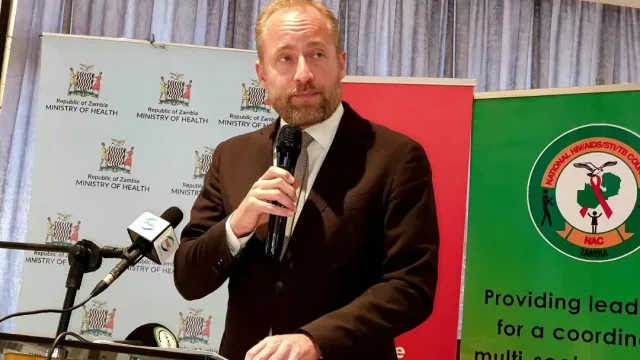
Permanent Secretary for Technical Services at the Ministry of Health, Kennedy Lishimpi, said the figures should force the country to sharpen its HIV prevention strategy, particularly among adolescent girls and young women.
He said adolescents and young people aged 15 to 24 accounted for about 6,000 new infections, representing 37 percent of new adult infections.
Lakatips
For Zambian newsrooms
Your reporting, credited and linked back
Join the newsrooms whose work reaches readers through Lakatips — your name on every story, and a route straight back to you.
Mr Lishimpi said the figures expose persistent social, biological and structural factors that continue to place young women at greater risk of HIV infection.
“This calls for targeted interventions and further analysis,” Mr Lishimpi said.
But while new infections remain a concern, Mr Lishimpi said Zambia has made major gains in keeping people living with HIV alive and preventing babies from acquiring the virus from their mothers.
The country recorded an estimated 1,308,000 people living with HIV in 2025, compared with 1,311,000 in 2023.
Mr Lishimpi said the relatively stable number demonstrated the impact of HIV treatment, with antiretroviral therapy helping people live longer while new infections and deaths continue to shape the epidemic.
Zambia has also dramatically reduced mother-to-child transmission of HIV, with the rate falling from 34.2 percent in 2005 to about 6.2 percent.
Mr Lishimpi said the country was now within reach of eliminating mother-to-child transmission but warned that critical gaps in antenatal care could slow progress.
He said particular attention was needed to ensure that pregnant women made their first antenatal visit within the first 12 weeks of pregnancy, while early infant diagnosis and retention of HIV-positive mothers and their babies in care also needed to be strengthened.
The impact is already visible among children.
The number of children living with HIV has fallen from 137,000 in 2005 to 59,000 in 2025, while new paediatric infections have plunged from 23,000 to just 2,700 over the same period.
Mr Lishimpi attributed the progress to the country’s elimination of mother-to-child transmission programme and the Option B+ approach, under which all HIV-positive pregnant and breastfeeding women are placed on lifelong ART regardless of their CD4 count or clinical stage.
AIDS-related deaths have also fallen sharply, from 66,000 in 2005 to about 16,000 in 2025.
The Ministry estimates that ART averted about 16,000 deaths in 2025, underlining the impact of sustained investment in HIV treatment.
But Mr Lishimpi cautioned that the progress should not create complacency.
He said advanced HIV disease remains a major driver of AIDS-related deaths, particularly among people who are missed by testing and treatment services or who interrupt treatment.
He said the 16,000 people who died of AIDS-related causes in 2025 represented individuals who may never have been tested, failed to link to care, interrupted treatment, experienced treatment failure or did not receive timely clinical intervention for advanced HIV disease.
In response, the Ministry is scaling up advanced HIV disease management, including CD4 screening at diagnosis and re-entry into care, cryptococcal antigen testing, tuberculosis screening and closer clinical monitoring during the first six months of ART.
At the prevention end, Government is turning to newer technologies in an attempt to stop infections before they occur.
Mr Lishimpi said Zambia was accelerating the rollout of long-acting injectable HIV prevention, including cabotegravir, administered every two months, and lenacapavir, which provides longer-lasting protection.
He said Zambia was among the first countries to begin deploying lenacapavir for HIV prevention, particularly targeting populations at higher risk of infection.
The Ministry is also expanding the DREAMS programme for adolescent girls and young women, strengthening comprehensive sexuality education and continuing voluntary medical male circumcision.
More than 2.5 million men, adolescents and boys have so far undergone voluntary medical male circumcision, which provides substantial protection against heterosexual HIV acquisition.
Mr Lishimpi said Zambia was targeting a reduction in new HIV infections to below 10,000 by 2030, in line with the UNAIDS Fast-Track strategy.
But reaching that target, he warned, would require the country to confront the conditions that continue to fuel the epidemic.
He cited gender inequality, poverty, limited access to education and social norms among the factors that must be addressed alongside medical and technological interventions.
Government, he said, would also progressively increase domestic financing for the HIV response while using provincial and district-level data to ensure resources are directed to communities carrying the greatest burden.
Mr Lishimpi said the Naomi model would help health authorities understand the epidemic at provincial and district level, allowing them to set local targets and allocate resources based on evidence.
“The work is not yet finished. It is work in progress,” he said, urging Government, health workers, cooperating partners and communities to renew their commitment to fighting HIV.
He said the latest estimates should not simply be treated as statistics but as a call to action to protect lives and ensure that Zambia does not lose the gains made against the epidemic.
The United Nations Population Fund (UNFPA) has warned that Zambia’s progress in the fight against HIV should not overshadow the risks facing adolescent girls and young women, particularly the interconnected threats of HIV, unintended pregnancy, sexually transmitted infections (STIs) and gender-based violence.
UNFPA Zambia Country Director Seth Broekman said the latest HIV estimates provide an opportunity to direct resources towards communities and groups facing the greatest risks instead of relying mainly on broad interventions.
Speaking at the launch of the HIV estimates, Mr Broekman said behind every statistic are young women and girls dealing with social, economic and health challenges that often overlap.
He cited the experiences of three young women to illustrate the situation.
One is a 20-year-old university student facing financial and academic pressure while navigating relationships where negotiating condom use and accessing confidential sexual health services can be difficult because of stigma and other barriers.
Another is a 19-year-old woman in Southern Province who engages in transactional sex because of limited economic opportunities and the need to support her younger siblings. Mr Broekman said she faces increased risks of gender-based violence and inconsistent access to HIV prevention services, including PrEP.
The third is a 23-year-old married mother in Central Province who believed she was protected from HIV because she was married, only to discover during a routine maternal health visit that she was HIV positive after her husband engaged in unprotected relationships outside the marriage.
Mr Broekman said such women require more than medical treatment, stressing the need for psychosocial support, comprehensive sexual and reproductive health services, gender-based violence services and legal protection.
He described the combination of risks as the “triangle of harm”, involving unintended pregnancy, HIV and STIs, and gender-based violence, including early and forced unions.
Mr Broekman said addressing these risks was also important to Zambia’s long-term economic development because young women who are protected from them are more likely to remain in school or training, acquire skills and enter the workforce.
He said the latest estimates show that Zambia has made significant progress in its HIV response, with adult HIV prevalence and annual new infections declining, while the country has surpassed the global UNAIDS 95-95-95 targets.
However, he warned that the gains should not lead to complacency.
Mr Broekman said adolescents and young people aged 15 to 24 account for 37 percent of new adult HIV infections, with young women continuing to carry a disproportionate burden.
He said adolescent girls account for more than half of the estimated 74,000 adolescents living with HIV in Zambia, while new infections among adolescents and children remain a concern.
The estimates also show significant geographical concentration of the epidemic, with Lusaka and Copperbelt provinces accounting for about 43 percent of Zambia’s total HIV burden, according to Mr Broekman.
He said district-level data should therefore guide the allocation of HIV prevention resources and services.
Mr Broekman said the changing global HIV financing environment, marked by declining external funding and rising health-system costs, made it even more important for Zambia to protect investments in prevention.
“Strategic investments in prevention preserve lives, save our human capital and reduce long-term treatment costs for the health system,” he said.
He outlined three priority actions for stakeholders.
First, he called for targeted HIV prevention based on district-level data, with resources directed towards high-burden areas and vulnerable populations.
Second, he urged the country to integrate HIV, sexual and reproductive health and gender-based violence services into primary healthcare to reduce fragmented care.
Third, he called for sustained financing for HIV prevention, particularly programmes targeting adolescent girls and young women.
Mr Broekman urged policymakers, cooperating partners and civil society organisations to use the new estimates to identify gaps, determine who is being left behind and improve interventions.
“Ask where the critical gaps remain, ask who is at risk of being left behind, and ask how we can refine our approaches to protect the health and rights of every Zambian,” he said.
He thanked the Ministry of Health, National HIV/AIDS/STI/TB Council, United States Government, UNAIDS, civil society organisations and other cooperating partners for supporting the development of the estimates.
Zambia is now being forced to take a hard look at its HIV response as the new Spectrum estimates project the country’s epidemic up to 2030, providing a test of whether current interventions are strong enough to deliver epidemic control.
Assistant Director for Monitoring and Evaluation Kelvin Kalombi said the latest estimates should not be treated as mere statistics, but as a warning and planning tool that must compel Zambia to confront gaps in its HIV response and strengthen interventions where progress is falling short.
Mr Kalombi said the projections, based on Zambia’s previous performance, would show what the HIV situation could look like by 2030 if current trends and interventions remain largely unchanged.
He said this should give policymakers and HIV stakeholders an opportunity to determine whether the country was on the right trajectory or needed to urgently change course.
“We have gathered here basically to look at the estimates and how they reflect our general performance as a nation with regard to HIV,” Mr Kalombi said.
He said the data would provide a basis for assessing whether Zambia was making sufficient progress towards controlling the epidemic, while identifying areas requiring stronger interventions.
Mr Kalombi said the findings would be critical at every level of the HIV response, from districts and provinces to the national level, because they would help authorities make decisions based on evidence rather than assumptions.
He said the 2030 projections were particularly important because they allowed Zambia to examine the likely consequences of its current performance and determine what needed to be strengthened to meet its targets.
“If the information that we put in will still remain the same, how can we strengthen them to try and achieve some of the things that are happening?” he asked.
Mr Kalombi said the estimates would ultimately help answer one of the biggest questions facing Zambia’s HIV response — whether the country was doing enough to achieve epidemic control.
He also acknowledged the contribution of cooperating partners, including UNFPA, UNAIDS, the United States Government, PEPFAR and academic institutions, whose support had helped Zambia develop and use the technology required to generate the HIV estimates.
Mr Kalombi said the evidence generated through the Spectrum system should now be translated into stronger policies, better planning and more effective interventions if Zambia was to change the trajectory of the epidemic before 2030.
He was speaking on behalf of the Director of Policy and Planning.
Source: Zambia24 — Read more
More to read
All Health →Chiefs Unite to Fight Cattle Diseases
Traditional leaders in Southern Province have convened in Maala, Namwala District, to develop strategies...
Breast Cancer Survivor Praises Improved Treatment Access
A 30-year-old breast cancer survivor has commended Government for improving access to cancer treatment services...
UTH Offering Mothers Labour Pain Relief
The University Teaching Hospital (UTH) Women and Newborn Hospital has performed more...