Politics
Netizens urged to verify information ahead of the polls
As Zambia prepares for the general elections, some netizens have continued to stress the importance of verifying information before sharing it, warning that the spread of fake news and unverified claims could fuel tension and violence amongst Zambians. Speaking in an interview…
Picture: Zambia Reports
By Beatrice Chabaya
As Zambia prepares for the general elections, some netizens have continued to stress the importance of verifying information before sharing it, warning that the spread of fake news and unverified claims could fuel tension and violence amongst Zambians.
Speaking in an interview with Zambia Reports, a resident of Chongwe East, Ms Clare Tembo said verifying information is not just a responsible online habit but an important step towards promoting peaceful elections.
She questioned why anyone would choose not to verify information during such a critical period.
“The Question infact should be, why should someone not verify information during this critical period?” Ms Tembo asked.
Lakatips
Advertise on Lakatips
Reach readers following the national conversation
Display, sponsored placements and briefing slots — across politics, business and sport.
She explained that sharing unverified information can contribute to election related violence, stating that false information has the potential to agitate members of the public and create unnecessary fear, anger and confusion.
According to Ms Tembo, human beings naturally respond emotionally to information, especially content that is designed to provoke strong reactions.
“Human beings are emotional by design. If we publish something that triggers people, they are likely to react through what psychologists call the three Fs which are fight, flight or freeze. The most common reaction is to fight because people, by instinct, want to protect themselves so that fight may be physical, but it can also be expressed through aggression online,” she said.
She has since encouraged members of the public to pause before sharing information, verify facts using credible sources, and avoid forwarding messages whose authenticity cannot be confirmed.
In another interview, Social media user, Rodex Chali said every citizen had a role to play in ensuring that the information shared during the election period contributed to peace rather than division, adding that responsible information sharing can help voters make informed decisions while safeguarding national unity.
“We all have a role to play when it comes to sharing information and consuming verified information, if we just go online to watch trending videos and neglect trying to verify the information we get then we will most likely spread misinformation thereby making the chain longer, who knows, maybe other political groups might resort to violence after seeing such publications or maybe not”, Mr Chali added.
©️Zambia Reports | 4th August 2026
Source: Zambia Reports — Read more
More to read
All Politics →
‘No one should be unlawfully detained,’ Amnesty calls for lawyer access to Jay Jay Banda
Amnesty International Africa has urged Zambian authorities to facilitate a medical examination and access to a lawyer for former Petauke Member of Parliament Emmanuel “Jay Jay” Banda following his arrest and transfer to Zambia. Zambian authorities have confirmed that Banda, a former MP and government…
Bemba Royal establishment raises the alarm over alleged attempt to desecrate Kafwaya’s grave
The Bemba Royal Establishment has alleged that heavily armed people travelling in six vehicles were reportedly using threats and coercion to force villagers in Lisunga territory to show them the grave of the late Cabinet minister, Mutotwe Kafwaya. The Establishment said Bemba customary governance required…
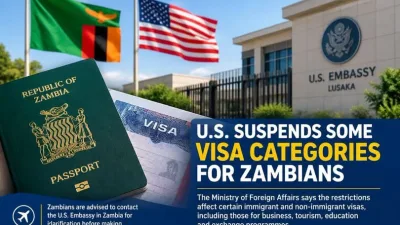
U.s. Tightens Visa Rules for Zambians
The Ministry of Foreign Affairs and International Cooperation says some Zambians are restricted from entering the United States under new travel measures that took effect on January 1, 2026. The restrictions affect people applying for immigrant visas and certain non-immigrant visas, including those for business…