Business
Petrol, diesel prices hit record highs as ERB hikes prices by over K6
The Energy Regulation Board (ERB) has announced increases of more than K6 per litre in the prices of petrol and diesel, citing higher international oil prices, geopolitical tensions in the Middle East and the reinstatement of excise duty. The price of petrol for October 2026…
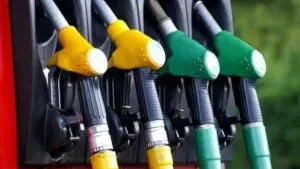
Picture: Zambia Monitor
The Energy Regulation Board (ERB) has announced increases of more than K6 per litre in the prices of petrol and diesel, citing higher international oil prices, geopolitical tensions in the Middle East and the reinstatement of excise duty.
The price of petrol for October 2026 has been increased by K6.17, from K25.29 to K31.46 per litre.
The price of diesel has also risen by K6.41, from K26.86 to K33.27 per litre.
ERB Board Chairperson, James Banda, said in a statement that the price of kerosene had increased by K2.75, from K27.02 to K29.76 per litre, while Jet A-1 would increase by K3.14, from K28.71 to K31.85 per litre.
Banda said the revised national uniform pump prices would take effect at midnight on September 30, 2026, and remain in force until superseded by the next scheduled price review.
Lakatips
Advertise on Lakatips
Reach readers following the national conversation
Display, sponsored placements and briefing slots — across politics, business and sport.
He said sustained geopolitical tensions in the Middle East had placed upward pressure on international petroleum prices during the review period.
Banda said petrol prices rose from US$104.94 to US$121.58 per barrel, diesel from US$150.92 to US$160.88 per barrel, and kerosene/Jet A-1 from US$125.30 to US$144.00 per barrel.
He said the Zambian Kwacha also depreciated against the United States dollar from K19.28 per US dollar to K19.76 during the same period.
Banda said ERB price-smoothing measures, together with the Government’s suspension of excise duty and zero-rating of Value-Added Tax (VAT) from April to September 2026, had moderated the impact on domestic petroleum prices.
He said the interventions helped maintain Zambia’s petroleum product prices among the lowest in the SADC and COMESA regions, while resulting in foregone tax revenue for the Government.
In the absence of the measures, he said, domestic fuel prices would have been materially higher.
Banda added that following the expiry of the tax-relief period in September 2026, the Government had resolved to reinstate excise duty with effect from October 2026 to mitigate the immediate impact on consumers, while VAT would be reinstated on December 1, 2026.
WARNING! All rights reserved. This material, and other digital content on this website, may not be reproduced, published, broadcast, rewritten or redistributed in whole or in part without prior express permission from ZAMBIA MONITOR.
Source: Zambia Monitor — Read more
More to read
All Business →
Y Celeb ft. Vocalist Zm – Dobo Video
Copperbelt rap heavyweight Y Celeb has released a new music video for his latest song, “Dobo,” a record that challenges the stereotypes society often attaches to people who smoke marijuana. The song questions the assumption that marijuana users cannot achieve success, highlighting how quick judgements…
Catholic priest Tyola, UPND’s Bwalya, reportedly reconcile
Catholic priest Father (Fr) Henry Tyola and United Party for National Development (UPND) official Frank Bwalya have reportedly reconciled following a dispute over alleged defamation and cyber-related abuse. Last week, Zambia Monitor reported that Bwalya, had threatened legal action against Fr Tyola over the alleged…

Zambia claims unemployment rate falls to 9.9%, as Western Province worst hit at 20.6%
Zambia’s unemployment rate fell to 9.9 percent in 2025 from 12.9 percent in 2024, while the employment-to-population ratio increased to 37.1 percent, according to the latest labour market survey. The findings were released during the official dissemination of the 2025 Labour Force Survey and Employment…