Business
Treasury moves to overhaul tax system in Zambia
Government says repeated tax reforms and investment incentives have failed to fully address private sector concerns, with many businesses still describing the country’s tax system as complex, unequal and unfair. These concerns have prompted the launch of public consultations on Zambia’s Medium-Term Revenue Strategy (MTRS)…
Picture: Zambia Monitor
Government says repeated tax reforms and investment incentives have failed to fully address private sector concerns, with many businesses still describing the country’s tax system as complex, unequal and unfair.
These concerns have prompted the launch of public consultations on Zambia’s Medium-Term Revenue Strategy (MTRS) 2027–2031, a roadmap the Government says will reshape the country’s revenue system without introducing new taxes.
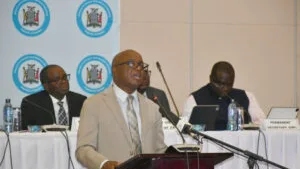
Speaking at the launch in Lusaka on Thursday at the Mulungushi International Conference centre, Secretary to the Treasury, Felix Nkulukusa, said government had, over the past five years, frequently engaged the public through town hall meetings on issues ranging from the economy and debt restructuring to economic growth and national development.
He said the tax system had been revised several times in consultation with the private sector in an effort to strike a balance between creating a favourable environment for entrepreneurship and investment while raising enough revenue to finance public services.
“Government had responded to concerns raised by industry by granting tax relief and incentives across priority sectors of the economy,” Nkulukusa said.
Lakatips
For Zambian newsrooms
Your reporting, credited and linked back
Join the newsrooms whose work reaches readers through Lakatips — your name on every story, and a route straight back to you.
He noted that the 2023 and 2024 Tax Expenditure Reports showed government had foregone between 1.25 and two percent of Gross Domestic Product annually—about K10 billion over the two years—through tax incentives intended to support businesses and stimulate economic growth.
Despite those measures, Nkulukusa said tax compliance remained low, while tax avoidance, tax evasion and smuggling continued to undermine domestic revenue mobilisation.
“Zambia’s revenue-to-GDP ratio had remained sluggish despite growth in many sectors of the economy, at a time when declining support from cooperating partners and repeated climate, health and geopolitical shocks had increased pressure on public finances,” he said.
Earlier, Ministry of Finance and National Planning Permanent Secretary for Budget and Economic Affairs, Mwaka Mukubesa, said the strategy would build on the country’s recent macroeconomic gains, including progress in debt restructuring, lower inflation, a reduced fiscal deficit and higher international reserves.
WARNING! All rights reserved. This material, and other digital content on this website, may not be reproduced, published, broadcast, rewritten or redistributed in whole or in part without prior express permission from ZAMBIA MONITOR.
Source: Zambia Monitor — Read more
More to read
All Business →Ministry of Mines Completes Allocation of 89 Mining Tenements in Kikonge
The Ministry of Mines and Minerals Development has today completed the allocation...

Manchester United’s winless run stretches to six after Leeds draw
Manchester United’s winless run extended to six matches in all competitions after Leeds United held Michael Carrick’s side to a draw at Elland Road. The result dealt another blow to Carrick, whose team arrived at the home of their long-standing rivals after a turbulent week…

ZCSA moves to expand consumer protection with 42 new proposed standards
The Zambia Compulsory Standards Agency (ZCSA) says it is consulting stakeholders on 42 proposed compulsory standards covering products ranging from food and chemicals to liquefied petroleum gas (LPG) and sanitary pads as part of efforts to strengthen consumer and environmental protection. ZCSA Public Relations Officer…