Business
Zambian farmers, SMEs gain access to finance with European Investment Bank support
FOR many Zambian farmers and agricultural SMEs, the biggest challenge has never been land or hard work, it has been access to affordable financing. To
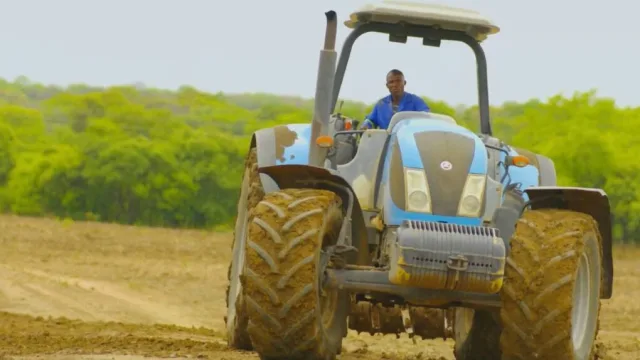
Picture: Kalemba
FOR many Zambian farmers and agricultural SMEs, the biggest challenge has never been land or hard work, it has been access to affordable financing.
To address this, the European Investment Bank (EIB Global) together with, the European Union (EU) are supporting Zambia’s agricultural sector through the Zambia Agriculture Value Chain Facility (ZAVCF), an initiative aimed at improving access to finance for farmers and agribusinesses across the country.
This is aligned to both the national priorities of Zambia and the EU Global gateway strategy to invest in sustainable agricultural transformation to enhance food security and boost rural economies.
The facility seeks to address longstanding financing challenges that have limited investment in agricultural production, and adoption of agri-technology.
Across rural Zambia, farmers often struggle to expand production, buy irrigation equipment or invest in storage facilities because bank loans remain difficult to obtain.
Lakatips
Advertise on Lakatips
Reach readers following the national conversation
Display, sponsored placements and briefing slots — across politics, business and sport.
In a statement, EIB vice president Karl Nehammer noted that despite the continent having vast agricultural potential Africa continues to import more food than it exports due to financing gaps, infrastructure challenges and low productivity among predominantly small-scale farmers.
But through partnerships, Nehammer said EIB Global is supporting agriculture across Africa by mobilising private investment, strengthening value chains and financing farmers and agribusinesses through local banks and large-scale projects.
The needs of Zambia’s agricultural sector are immense, and the public sector alone cannot provide all the capital required.
By de-risking investments and mobilising private sector involvement, the ZAVC Facility helps crowd in alternative financing for the benefit of businesses.
“Our goal is clear, an agricultural sector that feeds the world, empowers communities and preserves the planet for future generations,“ said Karl Nehammer.
ZAVCF is aimed at reaching local farmers and agribusinesses through the European Investment Bank’s intermediated lending framework.
This basically involves EIB Global channelling capital for businesses through local Zambian banks, who understand the market best and are able to channel funds to SMEs that need them the most.
Currently, EIB Global has running partnership agreements with ZANACO, First Capital Bank Zambia and Zambia Industrial Commercial Bank.
Through its partnership with ZANACO in 2021, the EIB provided a €15 million credit line supporting smallholder farmers and rural cooperatives nationwide, matched by the bank’s own investment.
In 2023, First Capital Bank secured a US$10 million development credit facility targeting agricultural SMEs which will be matched by FCB, while in 2025 the Zambia Industrial Commercial Bank signed an agreement expected to mobilise a combined €30 million to support private sector investment in agriculture.
The ZAVCF combines three key elements; long-term financing, risk-sharing guarantees and technical assistance.
For longer repayment periods, the banks may sometimes extend up to seven years to allow agricultural investments such as irrigation systems, processing equipment or storage facilities to help farmers become financially viable. The long tenures also make repayments more affordable.
Through the ZAVCF, there is risk-sharing arrangements supported by the European Union to complement the credit lines.
This risk sharing facility aims to reduce credit risk for financial intermediaries and will increase the banks’ capacity to extend financing to riskier or smaller companies.
It will enable the banks to offer loans on more attractive terms and incentivise banks to increase access to finance for clients with limited collaterals.
Equally important is technical assistance and capacity building.
On one hand, it strengthens the capacity of Zambian banks to lend to agrifood enterprises through support in formulating risk management policies.
On the other hand, farmers supported under the facility receive training aimed at improving productivity, environmental sustainability and business management skills.
According to EIB Senior Investment Officer for Financial Institutions, Sonja Mohnen, the programme also promotes inclusive growth by ensuring that women play a key role in agricultural expansion, with at least 30 percent of financing directed toward women-led/owned enterprises or farms.
Since its launch in 2021, funding mobilised through the programme has begun supporting agricultural SMEs ranging from crop producers to value-addition businesses supplying local and regional markets.
EIB Business and Investment Analyst, Charmaine Lebese noted that strict monitoring mechanisms track projects from loan approval through implementation to ensure funds are used for productive agricultural investments aligned with environmental and development standards.
By strengthening links between farmers, financial institutions and markets, the ZAVCF aims to shift Zambia’s agriculture sector from subsistence production toward commercially competitive and climate-resilient farming.
As implementation expands, the programme has already started to improve agri business as it aims to improve market access, stimulate rural enterprise growth and create employment opportunities across agricultural value chains, positioning agriculture as a central driver of Zambia’s economic transformation.
Source: Kalemba — Read more
More to read
All Business →
SADC urges investment in disaster resilience and financing mechanisms
The Southern African Development Community (SADC) has called for increased investment in long-term disaster resilience and sustainable financing mechanisms to minimise losses, protect livelihoods and help countries recover more quickly from disasters. SADC Deputy Executive Secretary for Corporate Affairs, Dr Judith Kateera, said floods, droughts…

ZRA seizes goods worth K22.5 million, impounds three stolen vehicles
The Zambia Revenue Authority (ZRA) and partner law enforcement agencies have seized assorted goods worth an estimated K22.5 million and impounded three vehicles confirmed to have been stolen outside Zambia during joint operations conducted from October 5 to 9. The operations were carried out across…

Zambia urged to strengthen waste controls over microplastic pollution risks
Environmental health advocate, Christopher Mtonga, has warned that microplastic pollution poses a threat to Zambia’s aquatic ecosystems and public health, calling for stronger waste management and pollution control measures. In a statement issued in Lusaka on Sunday, Mtonga said public discussions had largely focused on…