Zambia
Don’t Wait for the Next Election to Talk
ZCID wants structured dialogue among political parties beyond the polls By Francis Maingaila ♥️Lusaka, Zambia24...
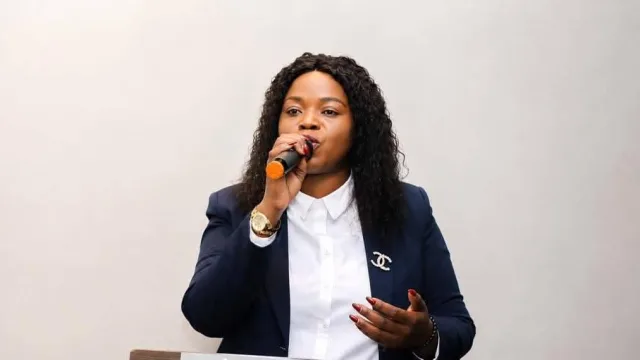
Picture: Zambia24
ZCID wants structured dialogue among political parties beyond the polls
By Francis Maingaila ♥️
Lusaka, Zambia24 — 3-03-2026 — The Zambia Centre for Interparty Dialogue (ZCID) has called for sustained and structured engagement among political parties, warning that Zambia’s democratic conversation must not come to an end simply because the 2026 general elections are over.
ZCID Executive Director Doreen Njovu Kabwe said the inauguration of President Hakainde Hichilema and Vice President Mutinta Nalumango had opened a new phase in Zambia’s democratic journey and should provide an opportunity for political actors to rebuild trust, engage one another and work towards national unity.
Ms Kabwe said the participation of political parties, candidates, women, young people and the electorate in the elections had demonstrated the importance of citizens and political actors in shaping the country’s democratic future.
She said the heavily contested election should now be followed by greater political tolerance, peaceful coexistence and efforts to strengthen national unity.
Lakatips
For Zambian newsrooms
Your reporting, credited and linked back
Join the newsrooms whose work reaches readers through Lakatips — your name on every story, and a route straight back to you.
Ms Kabwe welcomed President Hichilema’s call that political competitors and their supporters remained important to Zambia’s democracy.
She said the President’s message that “whatever our political choices, we remain one people” should provide a basis for political parties to engage each other despite their differences.
Ms Kabwe said political disagreements were a normal part of democracy and should be managed through dialogue rather than confrontation.
She said Zambians should not wait for another election or political crisis before political parties begin talking to each other.
“Dialogue must be continuous, structured and institutionalised throughout the political cycle,” Ms Kabwe said.
She said ZCID was strengthening its existing platforms to provide political parties with regular opportunities to discuss national issues and resolve differences peacefully.
Ms Kabwe said the Forum for Political Parties remained an important platform, particularly for parties without representation in Parliament, to participate in national political discussions.
She said the Governing Board would continue providing institutional direction and oversight, while the Secretaries General’s Meeting would provide space for political coordination, discussion of emerging issues and preparation for higher-level dialogue.
Ms Kabwe said the National Democracy Stakeholders Summit would provide a broader platform for discussing national issues, democratic reforms, political coexistence and peacebuilding.
She said ZCID also wanted to actualise the Summit of Political Party Presidents, which would provide an opportunity for party leaders to engage directly on matters affecting the country and identify areas of common ground.
Ms Kabwe stressed that these platforms were not intended to replace Parliament, Government or other constitutional institutions.
She said they were meant to complement existing democratic institutions by creating additional spaces where political actors could engage outside formal processes.
Ms Kabwe said ZCID would continue engaging both parliamentary and non-parliamentary political parties because parliamentary representation should not be the only measure of political relevance or participation.
“Political parties across Zambia’s political spectrum have important roles to play in shaping the country’s democratic discourse and national dialogue,” Ms Kabwe said.
She said meaningful dialogue should go beyond meetings and statements and instead lead to greater understanding, consensus-building and action.
Ms Kabwe called on political parties to embrace tolerance, respect divergent views and remain committed to peaceful political engagement.
She said democracy should not only be measured by who wins an election, but also by the ability of political actors to come together after the polls.
Ms Kabwe said political competitors should be able to disagree without becoming enemies and compete without undermining the country’s peace.
She said Zambia’s political diversity should be treated as a democratic asset rather than a source of division.
Ms Kabwe said ZCID would continue working to turn political differences into dialogue, dialogue into understanding and understanding into consensus that advances Zambia’s democratic progress.
“The elections may be over. The democratic conversation continues,” Ms Kabwe said.
Source: Zambia24 — Read more
More to read
All Zambia →Political Analyst Challenges Amnesty International
Political and governance analyst FARAI RUVANYATHI has challenged Amnesty International’s concerns over...
Sikaile Challenges Amnesty International on JJ Banda
Human rights advocate SIKAILE SIKAILE has urged Amnesty International to uphold impartiality...
ZLDC Proposes Major Rental Law Reforms
The Zambia Law Development Commission (ZLDC) says significant changes are expected...