Bank of Zambia
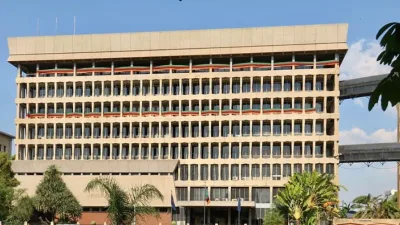
Monetary policy, the policy rate and the central bank.
43 stories
-
Business
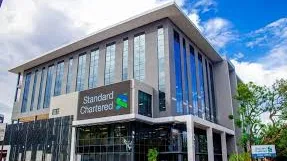
Stanchart’s profit Standard Chartered Bank Zambia, after tax drops 36%
Standard Chartered Bank Zambia one of the
-
Business
Bank of Zambia Introduces 20-Year Government Bond
The Bank of Zambia has announced the issuance of a 20-year Government...
-
Business
Bank of Zambia Remains Sole Authorised Gold Buyer
The government says the Bank of Zambia remains the country’s sole authorised buyer of gold,...
-
Business
BoZ’s $470 million gold reserve built over six years, is Zambia’s Central Bank doing enough?
The Bank of Zambia (BoZ), the nation’s
-
Business
Access Bank eyes broader partnership with Zambia Air Force
Access Bank Zambia says it is looking to deepen its partnership with the Zambia Air Force (ZAF) beyond its sponsorship of the Red Arrows Rugby Club (RARC). Access Bank Zambia Managing Director, Dr Iheanyi Nwogu, said the bank’s relationship with the Zambia Air Force extended…
-
Business
Zambia joins World Bank minerals compact to target 250,000 jobs by 2031
Zambia is seeking to attract private investment into mining and supporting infrastructure under a new World Bank Group minerals partnership, with a target of creating 250,000 direct and indirect jobs by 2031 while increasing copper production. Zambia participated in the launch of the World Bank…
-
Politics
Bank of Zambia Remains Sole Authorised Gold Buyer
The government says the Bank of Zambia remains the country’s sole authorised buyer of gold, as authorities move to tighten regulation of the gold trading sector. Ministry of Mines and Minerals Development Permanent Secretary Hapenga Kabeta says gold purchasing and processing arrangements…
-
Business
Bank of Zambia cuts policy rate to 13.25% as inflation remains anchored within target band
The Bank of Zambia Monetary Policy Committee has adjusted the Monetary Policy Rate downwards to 13.25 percent, citing a favourable inflation outlook and the need to better align the policy stance with inflation at 6.1 percent. Bank of Zambia Governor, Dr. Denny Kalyalya, said projections…
-
Business
Bank of Zambia Remains Sole Authorised Gold Buyer
The government says the Bank of Zambia remains the country’s sole authorised buyer of gold, as authorities move to tighten regulation of the gold trading sector. Ministry of Mines and Minerals Development Permanent Secretary Hapenga Kabeta says gold purchasing and processing arrangements are expected to…
-
Business
Zambia targets fresh financing, investment at IMF-World Bank meetings
Zambia is seeking to mobilise development financing, attract productive investment and strengthen international partnerships at the 2026 Annual Meetings of the International Monetary Fund (IMF) and World Bank Group, which opened in Bangkok, Thailand, on Monday. Finance and National Planning Minister, Situmbeko Musokotwane, is leading…
-
Business
Bank of Zambia demands full disclosure on financial products to consumers
The Bank of Zambia (BoZ) has directed financial service providers to ensure consumers fully understand the products they are signing up for, saying customer protection went beyond simply presenting contracts for signature. BoZ Assistant Director for Consumer Protection and Market Conduct, Banji Milambo, said consumers…
-
Business
Zambia urges World Bank to fast-track green investments along Lobito Corridor
Zambia has urged the World Bank Group to accelerate green investments along the Lobito Corridor and strengthen climate preparedness as the country braces for an anticipated El Niño event. Minister of Green Economy and Environment, Gilbert Siame, said on Friday that the corridor presented a…
-
Business
Zambia’s apex bank introduces 20-year govt bond to deepen domestic capital market
The Bank of Zambia (BoZ) has introduced a 20-year government bond as part of efforts to develop longer-dated financial instruments and deepen the domestic capital market. According to a public notice issued on Thursday, the new bond will form part of Zambia’s benchmark bonds and…
-
Sport
Absa Bank committed to growing sports tourism
TRYNESS TEMBO Lusaka ABSA Bank Zambia Plc and its corporate partners have pumped K14 million towards the staging of this month’s Absa Marathon, with managing director Mizinga Melu reaffirming commitment to growing sports tourism and promoting social inclusion. The marathon is billed for September 26…
-
Business
ITC, Access Bank partner to support small businesses across 14 African countries
The International Trade Centre (ITC) and Access Bank have entered into a three-year partnership to support small and medium-sized enterprises across 14 African countries, including Zambia, through improved access to finance, business skills and markets. The partnership, formalised through a memorandum of understanding, brings together…
-
Business
World Bank awaits Zambian govt’s nod for proposed $102 million forestry programme
The World Bank is ready to begin preparing a proposed $102 million programme to develop Zambia’s plantation forestry sector, subject to a formal request from the government, the Ministry of Green Economy and Environment said. The proposed Lobito Plantation Forest Economy Programme aims to promote…
-
Politics
Access Bank, Harvest Group, others turn up for Ambassador Clark-Omeru, as Letter of Credence presented to Hichilema
Nigeria’s new High Commissioner to Zambia, Ambassador Queen Efe Alexandra Clark-Omeru on Friday presented her Letter of Credence to President Hakainde Hichilema. The ceremony which took place at the State House in Lusaka marked her formal admittance into Zambia as Nigeria’s highest-ranked diplomatic official. She…
-
Business
Zambia collects ¥1.3 billion Chinese Yuan in mining taxes
The Bank of Zambia (BoZ) has announced
-
Business
$514 million from Zambia’s foreign reserves used for bond buyback – BoZ
The Bank of Zambia (BoZ), the nation’s
-
Business
US EXIM reopens short-term trade financing facilities for Zambia
The United States Export-Import Bank (US EXIM) has reopened credit and insurance facilities for short-term trade transactions involving Zambia’s private sector, the Zambian Embassy in Washington said. The development follows the amendment of the bank’s Country Limitation Schedule (CLS), allowing US EXIM to consider financing…