Agriculture
How can smallholder farmers beat projected 2026-2027 El Niño?
Agronomist Clever Munsunge, founder of CM Agronomy
Picture: Zambian Business Times
Agronomist Clever Munsunge, founder of CM Agronomy Services, has indicated that smallholder farmers can reduce the impact of a projected 2026-2027 El Niño by adopting conservation farming practices that improve soil moisture retention.
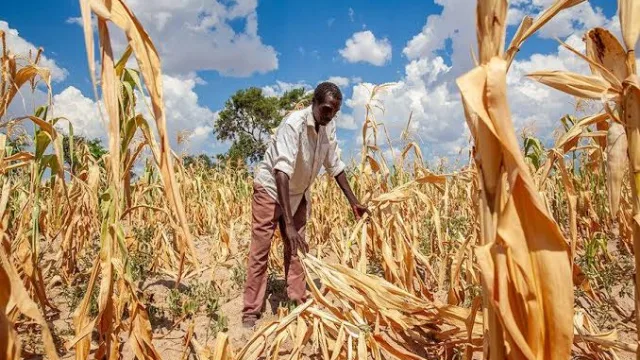
The warning comes after Zambia experienced one of its worst droughts during the 2023-2024 farming season, when an El Niño-induced dry spell severely disrupted rain-fed agriculture across the country. During the drought, Zambia lost over one million hectares of planted crops, representing approximately 45% of the country’s 2.2 million hectares of planted agricultural land, prompting President Hakainde Hichilema to declare the situation a national disaster in February 2024.
Speaking in an interview with Zambian Business Times – ZBT, Munsunge advised smallholder farmers to prepare early for possible climate shocks by adopting conservation farming, using appropriate seed varieties and making better use of available rainfall.
“Conservation farming is an important strategy and good agricultural practice because it helps farmers capture, conserve and use available rainfall more efficiently, while improving soil health over time,” he said.
Munsunge explained that farmers should minimise soil disturbance by avoiding unnecessary ploughing and instead use ripping or planting basins, while retaining crop residues such as maize stalks and leaves to keep the soil covered and reduce moisture loss. “Farmers should not burn crop residues, instead retain, mulch, compost or properly incorporate residues into the soil to improve soil health and protect against erosion,” he said.
Lakatips
For Zambian newsrooms
Your reporting, credited and linked back
Join the newsrooms whose work reaches readers through Lakatips — your name on every story, and a route straight back to you.
Munsunge told ZBT that farmers should prepare land before the rains begin and plant promptly once adequate moisture becomes available, stating that early planting allows crops to make better use of limited rainfall during the growing season.
“Farmers should also select drought-tolerant and early-maturing varieties suited to their agro-ecological regions,” he said. Meanwhile, the Agronomist urged farmers to diversify into crops such as cowpeas, beans, groundnuts, soybeans, sorghum and millet to reduce dependence on a single crop.
Article by Philip Sinkala
Source: Zambian Business Times — Read more
More to read
All Agriculture →47,000 Farmers Redeem Inputs in NP
Over forty seven thousand farmers in Northern Province have redeemed their farming inputs under...
Authorities Impound 17 Cattle in Itezhi-Tezhi
Itezhi-Tezhi District Commissioner TOBIAS NAMANTEMBA has warned livestock owners against transporting cattle without the...
New Cattle Centre Boosts Sesheke Farmers
Cattle farmers in Maondo Chiefdom of Sesheke District in Western...