Business
Tanzania to host parliamentarians as Dira 2050 moves into implementation
Tanzania will host parliamentarians from around the world in Arusha from October 5 to 9 for the 153rd Assembly of the Inter- Parliamentary Union, as the country begins implementing Development Vision 2050, its long- term plan to build a $1 trillion economy. The Assembly will…

Picture: Zambia Monitor
Tanzania will host parliamentarians
from around the world in Arusha from October 5 to 9 for the 153rd Assembly of the Inter-
Parliamentary Union, as the country begins implementing Development Vision 2050, its long-
term plan to build a $1 trillion economy.
The Assembly will bring together representatives from the IPU’s 183 member parliaments for
discussions centred on good governance, inclusion, trust and opportunities for all. The
Governing Council is also expected to elect a new IPU president for a three-year term.
The meeting comes during the first year of Tanzania’s Development Vision 2050, or Dira 2050,
which targets annual per-capita income of at least $7,000 and a more industrialised, productive and internationally competitive economy by mid-century.
Implementation has begun through the Fourth Five-Year Development Plan and the 2026/27
national budget.
The National Planning Commission said on September 5 that 150 development projects had
already been registered on Tanzania’s new e-Delivery system since it became operational on July
Lakatips
For Zambian newsrooms
Your reporting, credited and linked back
Join the newsrooms whose work reaches readers through Lakatips — your name on every story, and a route straight back to you.
1. More than 500 projects are eventually expected to be tracked through the platform as part of
efforts to strengthen implementation, transparency and accountability under Dira 2050.
The development comes as Tanzania records stronger activity in trade and private-sector
financing.
Goods and services exports reached almost $20 billion in the year to July 2026, an increase of
16.5 percent, according to the latest economic data. Manufactured exports rose 46 percent to
about $2.22 billion, while gold exports increased to $5.67 billion.
Private-sector credit growth reached 31.2 percent in July 2026, providing another indicator of
expanding borrowing and commercial activity.
Infrastructure investment is also reshaping the economic base.
Hon Elibariki Kingu representing Tanzania in New York during IPU higher level political meetings
Tanzania also recently inaugurated the 2,115-megawatt Julius Nyerere Hydropower Plant on the
Rufiji River. TANESCO says the project now supplies roughly half of the electricity dispatched to the national grid, while national installed generation capacity has risen to approximately 4,646MW.
Electricity access has increased from 78.4 percent in 2020 to 85.5 percent, while the proportion of citizens connected to electricity has risen from 37.7 percent to 52.1 percent.
The additional generation capacity supports Tanzania’s broader push to expand manufacturing,
mineral processing, agricultural value addition, digital services and other electricity-intensive
industries.
Trade infrastructure is expanding alongside energy capacity.
Dar es Salaam port handled 27.83 million tonnes of cargo between July 2025 and March 2026,
compared with 19.31 million tonnes during the corresponding period a year earlier, an increase
of almost 30 percent.
Tanzania’s ports, railways and road corridors provide access to the Indian Ocean for several
inland economies, including Zambia, Rwanda, Burundi, Malawi and the Democratic Republic of
Congo.
The country’s membership in both the East African Community and the Southern African
Development Community also places it within two major regional economic blocs.
Agriculture remains another important part of the transition. Agricultural exports increased from
$2.1 billion in 2021/22 to $3.73 billion in 2024/25, while national food self-sufficiency reached 130 percent.
Tanzania is seeking to convert higher production into more processing, value addition, exports
and employment, particularly as African economies deepen trade through the African
Continental Free Trade Area.
The IPU Assembly will provide an international forum for many of the governance questions
accompanying those changes.
Its programme includes discussions on empowering communities through inclusion and
opportunity, a workshop on delivering healthy food, parliamentary strategies for advancing the
rights and empowerment of people living with disabilities, and a review of the implementation of previous IPU resolutions.
Tanzania’s Parliament will meanwhile play a central domestic role in Dira 2050 through budget
approval, legislation, representation and oversight of public institutions and development
programmes.
Hon Asha feruzi,Kiza mayeye and Elibariki kingu actively participated in the Instanbul IPU deliberations
The $1 trillion economy remains a long-term strategic forecast. Its achievement will depend on sustained productivity growth, private investment, skills development, infrastructure
performance and the ability to translate public projects into jobs, exports and higher household
incomes.
The Arusha Assembly therefore comes as Tanzania moves from setting long-term ambitions to
measuring their implementation. While the 153rd IPU Assembly will place Tanzania before a
global parliamentary audience for five days, the country’s longer test will be whether its
expanding infrastructure, exports, private-sector activity and development projects translate into
broader economic opportunity over the years ahead.
WARNING! All rights reserved. This material, and other digital content on this website, may not be reproduced, published, broadcast, rewritten or redistributed in whole or in part without prior express permission from ZAMBIA MONITOR.
Source: Zambia Monitor — Read more
More to read
All Business →
Ecobank Zambia commits K1.5 million to upgrade Bauleni Legacy Academy
Ecobank Zambia has committed about K1.5 million over the next three years to upgrade Bauleni Legacy Academy in Lusaka, with the investment targeting school infrastructure and learner development. The commitment was announced on Wednesday during the signing of a Memorandum of Understanding between Ecobank Zambia…

Afreximbank, ZEP-RE join forces to build skills for Africa’s growing trade ecosystem
The African Export-Import Bank (Afreximbank) and ZEP-RE (PTA Reinsurance Company) have agreed to strengthen professional and institutional capacity in trade, insurance, reinsurance and risk management as Africa seeks to deepen cross-border commerce and investment. This is according to a statement issued on Wednesday. The three-year…
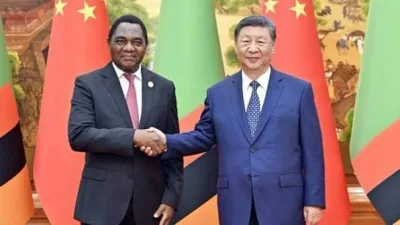
China Rejects Alleged Biased Remarks on Mining Investments in Zambia, Cites K10bn in Taxes, 45,000 Jobs
The Chinese Embassy in Zambia has rejected what it describes as biased and misleading remarks...